-
01The Port Area Centuries Ago: Akita Fort, the Northern Outpost of Yamato Rule#Ancient Times
-
02Ancient Diplomacy: Exchange with the Continent#Ancient Times
-
03Uncovering the History of Akita Fort#Ancient Times
-
04Lacquer-Coated Paper / Ink-Face Pottery#Ancient Times
-
05Wooden Tablets#Ancient Times
-
06Armor and Swords#Ancient Times
-
07Administrative Compound / Advanced Toilet Technology#Ancient Times
-
08Koshiō Shrine#Ancient Times
-
09Tsuchizaki Minato Hikiyama Matsuri Festival#Traditional Culture
-
10Sounds of the Tsuchizaki Minato Hikiyama Matsuri Festival#Traditional Culture
-
11Tsuchizaki Minato Port Area Historical Museum#Medieval to Modern Times
-
12The Port Town of Tsuchizaki#Medieval to Modern Times
-
13Arrival of Kitamaebune#Medieval to Modern Times
-
14Tsuchizaki Air Raid#Medieval to Modern Times
-
15Tsuchizaki Shinmeisha Shrine#Traditional Culture
-
16Modernization of the Port#Medieval to Modern Times
-
17Akita Port: Today and Beyond#Looking to the Future
-
18Offshore Wind Energy at Akita Port#Looking to the Future
-
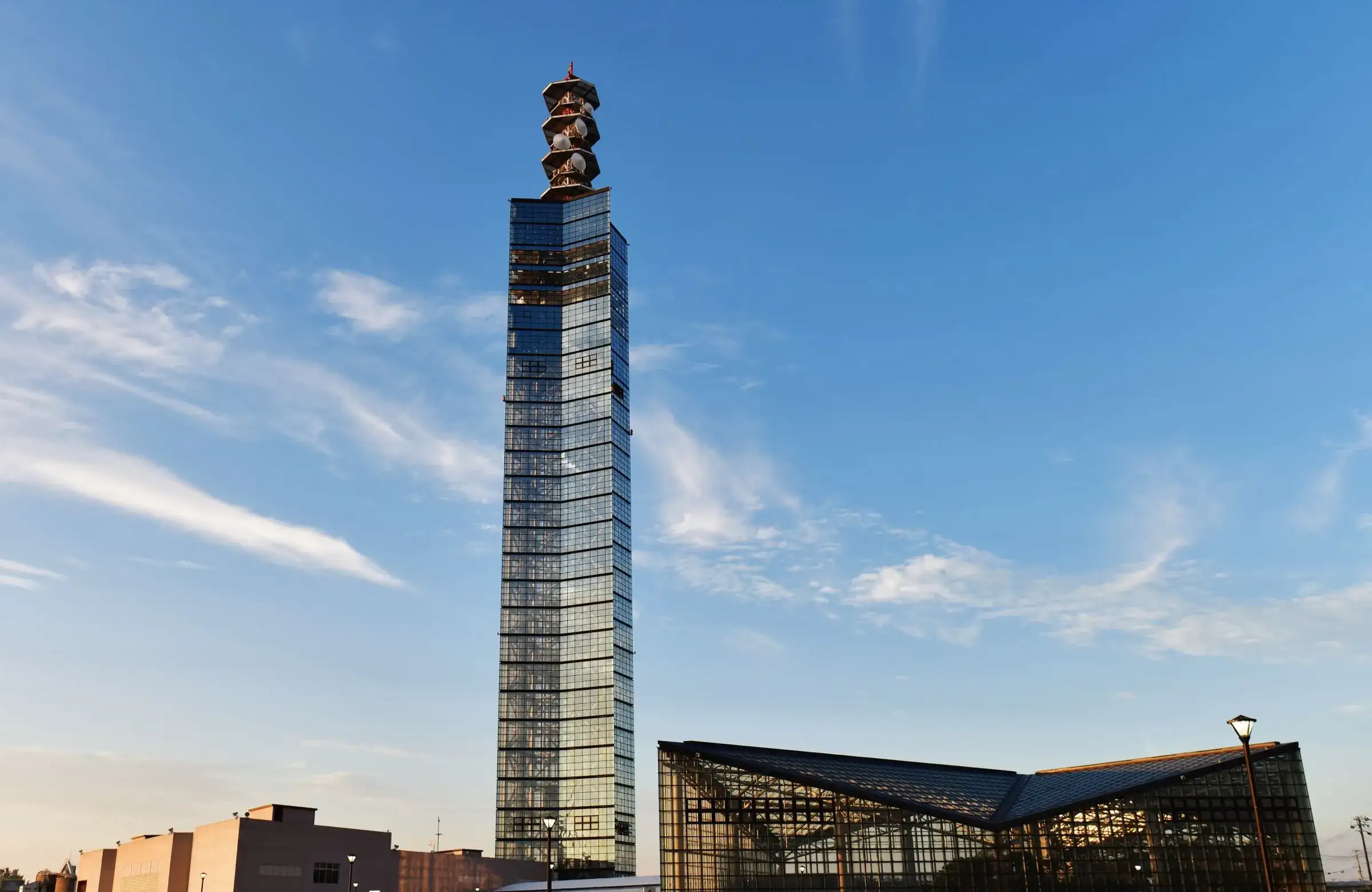
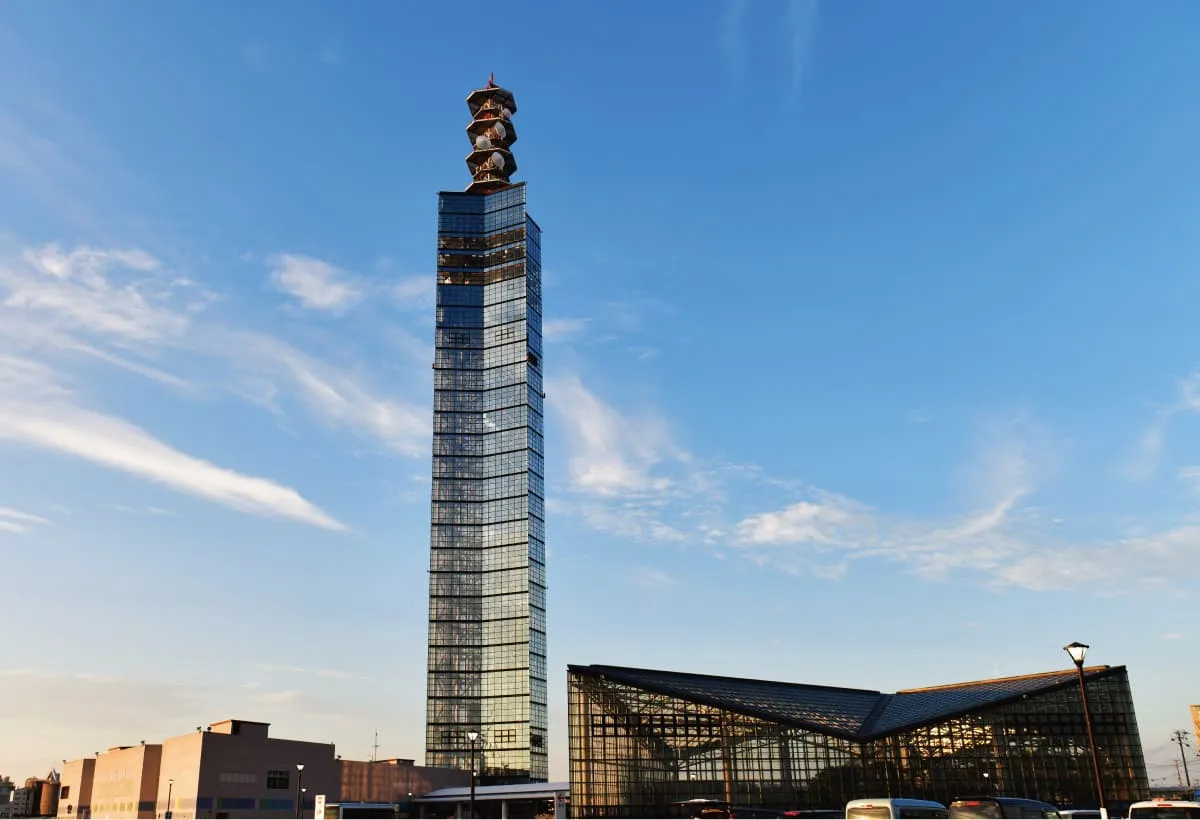
19Gateway to Tsuchizaki: Port Tower Selion#Looking to the Future
-
20Sake Brewing in Tsuchizaki#Food Culture
-
21Kasube-ni(Simmered Skate Fish) / Fugu(Pufferfish)#Food Culture
The Port Area Centuries Ago: Akita Fort, the Northern Outpost of Yamato Rule
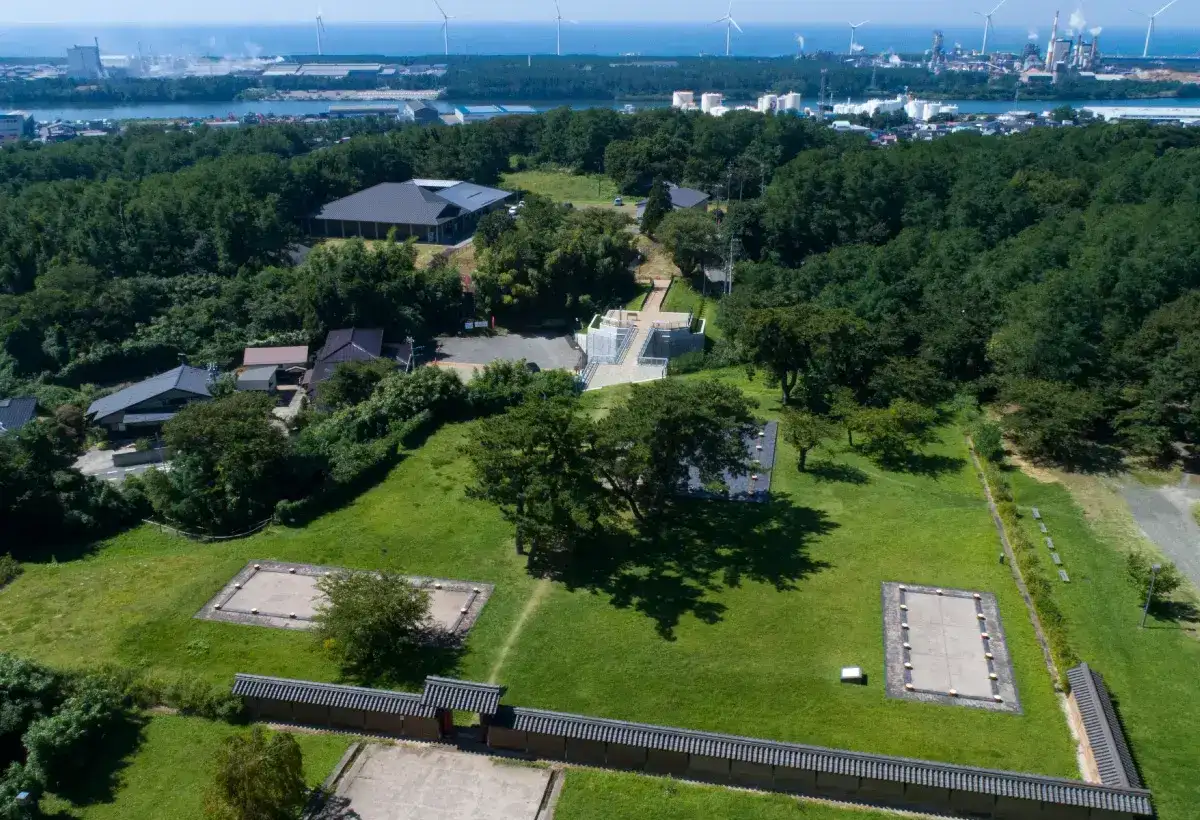
Over one thousand years ago, a government fortress known as Akita Fort stood roughly 2 kilometers southeast of Port Tower Selion. Akita Fort was an important hub of diplomacy and trade from the eighth to the tenth century. It was the northernmost outpost of the powerful Yamato kingdom, which would become the Japanese state. The Yamato emperor and his court were based in what is now Nara Prefecture, over 800 kilometers south. Akita Fort was built in 733 to strengthen Yamato control in northern Honshu, which was populated by people they called “Emishi.”
Emishi were indigenous people living outside Yamato control on Northern Honshu. Officials at the fort were in charge of managing relations with the Emishi, and as these relations changed, so did the appearance and function of Akita Fort.
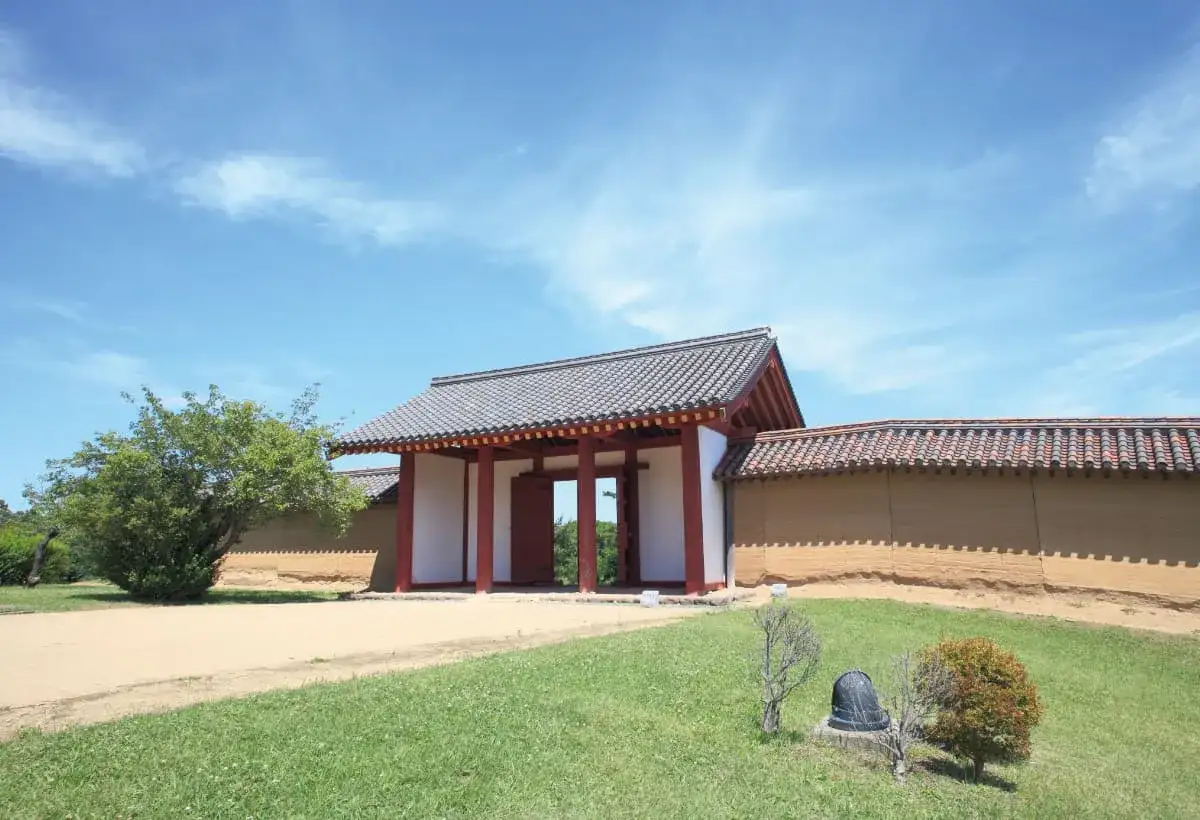
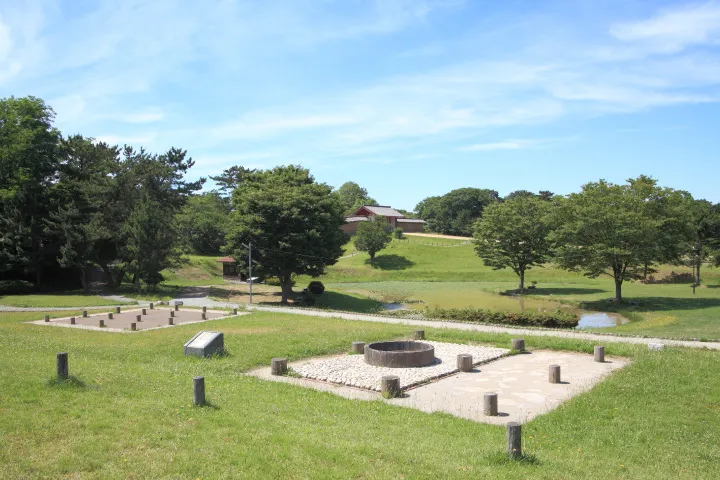
Today, the site includes a museum and reconstructions of parts of the fort. Excavations at the site are ongoing, and each new discovery reveals more about the Emishi and life on the fringes of the Yamato state.
Akita Fort as Strategic and Trading Center
Yamato officials stationed at the fort collected taxes, conducted censuses, and surveyed the surrounding area. The information and revenue they gathered were crucial for increasing the political and economic power of the Yamato. Officials mediated disputes between Emishi and those living at the fort. Many residents at the fort had been relocated by the Yamato government to settle and develop this northern frontier.
The government also sent warriors to Akita Fort to respond when tensions with Emishi escalated into violence. After a major uprising in 878, the fort’s outer walls were reinforced and equipped with larger watchtowers to deter future attacks.
Akita Fort was strategically located for trade with peoples living in what is now Aomori and Hokkaido Prefectures. In exchange for rice, iron, pottery, and textiles, the fort received horses, kelp, hawk feathers, and furs and skins from animals such as sea otter, bear, and seal. Many of these rare goods were then shipped to the Yamato capital in Nara, creating a network of exchange that stretched across the archipelago.
PICK UP
- Name
- Akita Fort Ruins
- Location
- 5 Terauchi Ohata, Akita-shi, Akita-ken 011-0939
- Tel
- 018-845-1837
Ancient Diplomacy: Exchange with the Continent
Akita Fort’s proximity to the Sea of Japan made it a center for international diplomatic exchange. At the time, diplomatic relations between the Yamato and kingdoms on the Asian mainland were maintained by large delegations that traveled to and from the continent laden with gifts.
Akita Fort was the entry point for delegations visiting from Balhae (Japanese: Bokkai), an ancient kingdom that controlled most of Manchuria, Outer Manchuria, and the northern part of the Korean peninsula. Balhae officials landed in Dewa Province and likely rested at Akita Fort during six trips between 727 and 795. They then traveled south to Nara to meet with representatives of the Yamato court.
Archaeological excavations at Akita Fort have uncovered clues as to where diplomatic visitors may have stayed. The remains of pour-flush toilets, the latest in sanitation technology at the time, were found just east of the fort. Organic remains in the drainage ditch contained the eggs of a type of tapeworm found only in pork. Pork was not eaten in Japan at the time, but it was present in cuisine from the mainland, suggesting that foreign officials likely lodged at the temple that once stood in the area. The toilets were built during a spike in diplomatic relations in the eighth century and were removed in the ninth century after Balhae stopped sending envoys, further supporting this theory.
PICK UP
- Name
- Akita Fort Ruins
- Location
- 5 Terauchi Ohata, Akita-shi, Akita-ken 011-0939
- Tel
- 018-845-1837
Uncovering the History of Akita Fort
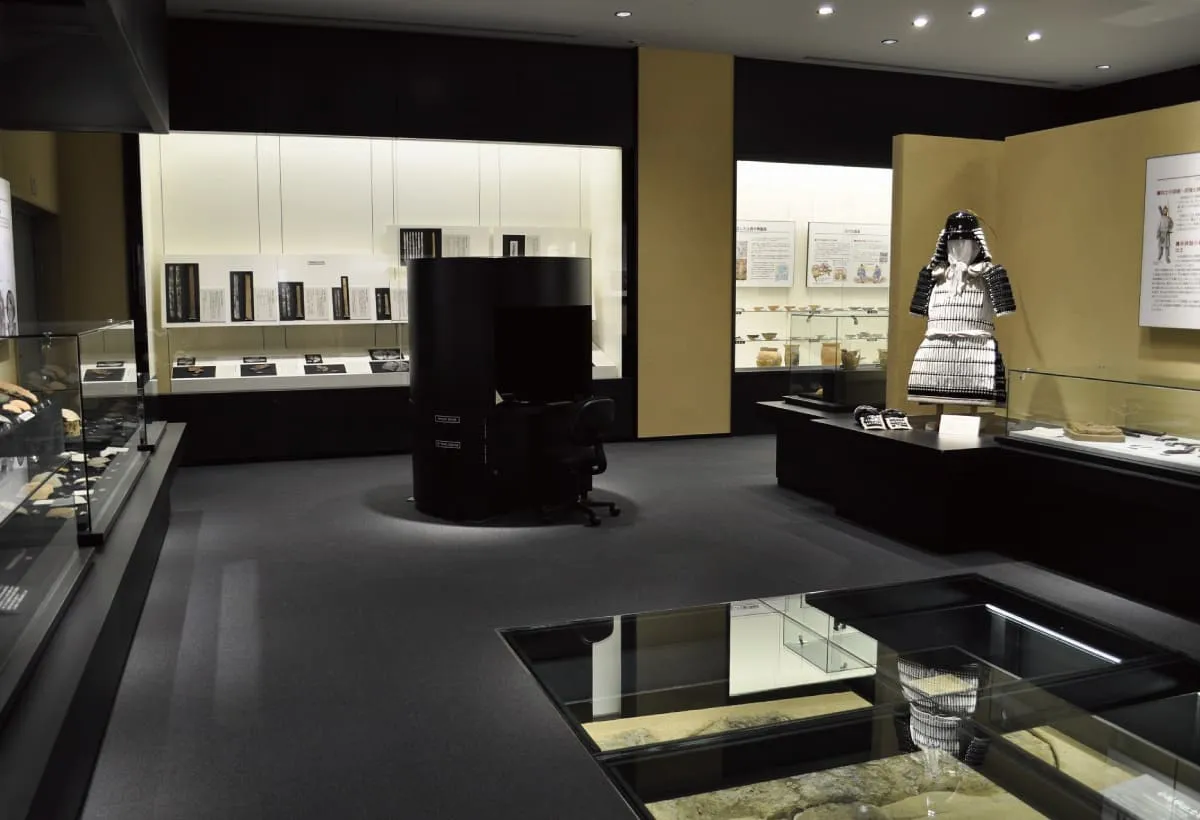
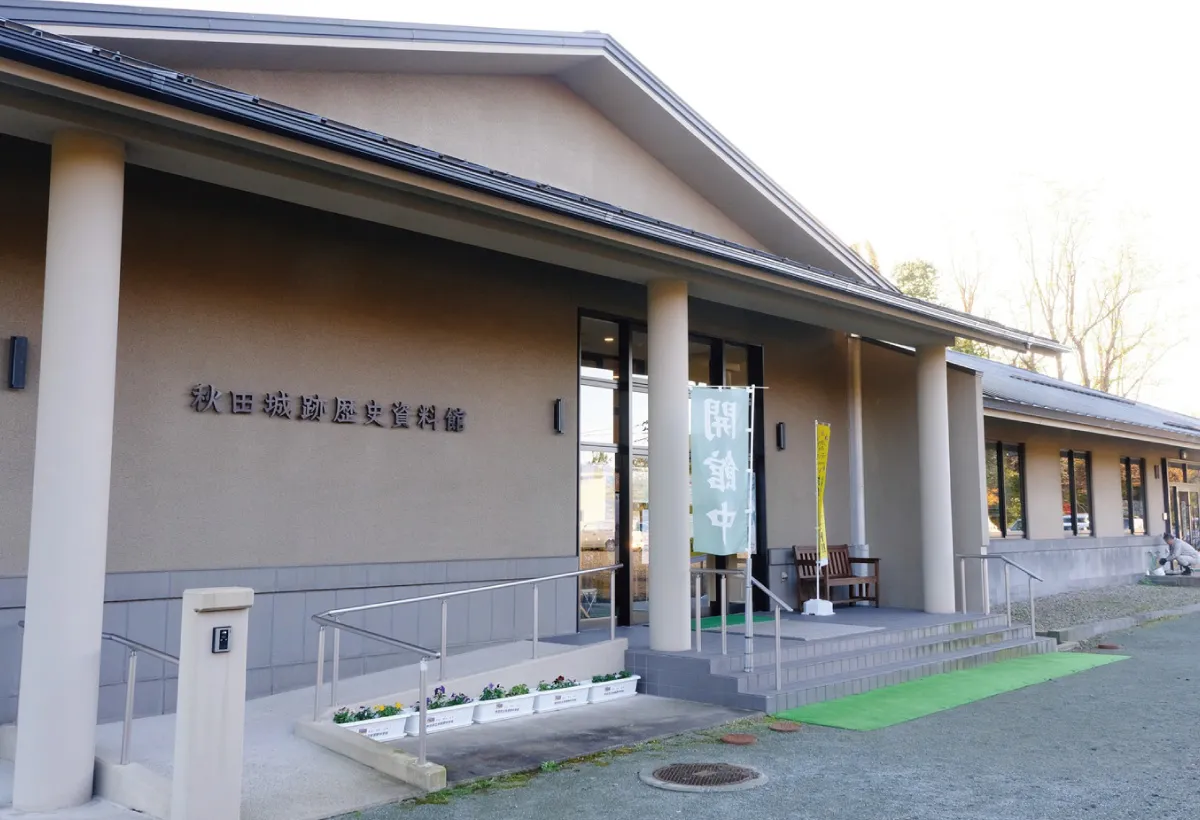
The Akita City History Museum of Akita Fort Ruins exhibits artifacts uncovered at the site of Akita Fort. The fort was a center of both regional and international exchange from the 700s to the mid-900s.
Some of the objects on display include wooden tablets inscribed with official records, ink-inscribed ceramics, and implements used by record keepers, as well as weapons and armor. A portion of the fort’s earthen walls have been reconstructed outside the museum. Tablets equipped with an AR app that shows how the entire site may have looked in the past can be borrowed free of charge at the reception desk.
Akita Fort fell into disuse around the mid-900s and its history and location were eventually forgotten. Renewed interest in the ancient fort began in the early 1800s, but the first large-scale excavations started in 1959. The area is still an active archaeological site, and each dig is sure to reveal new insights into life at Akita Fort.
PICK UP
- Name
- Akita City History Museum of Akita Fort Ruins
- Location
- 9-6 Terauchi Yakeyama, Akita-shi, Akita-ken 011-0907
- Business hours
- 9:00~16:30(New Year's holiday closure)
- Tel
- 018-845-1837
Lacquer-Coated Paper / Ink-Face Pottery
Lacquer-Coated Paper
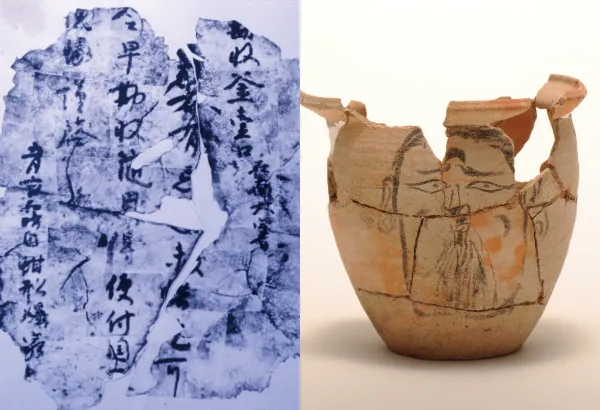
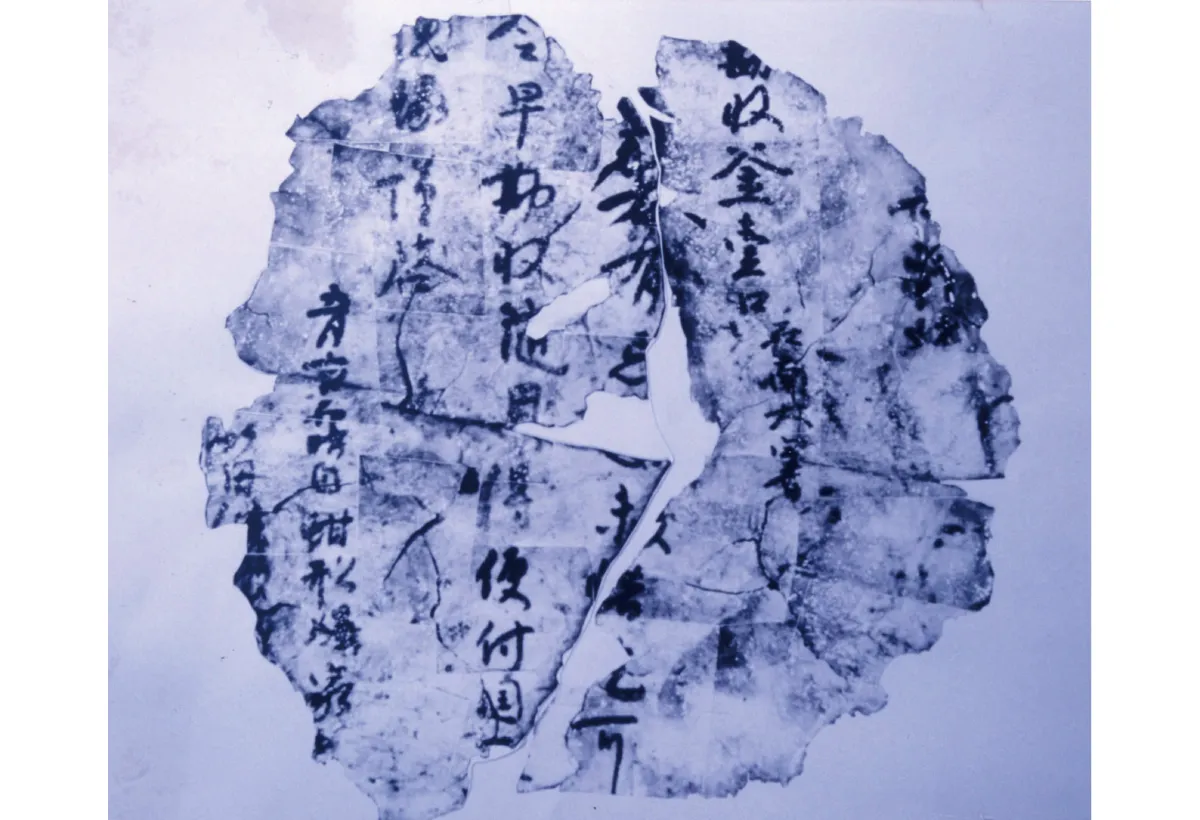
More than 30 paper documents related to routine work at Akita Fort have been unearthed during the fort’s excavations. These documents produced by fort officials were unintentionally coated with lacquer, miraculously preserving them for centuries. Instead of simply throwing away old documents, officials sometimes gave their papers to lacquerware artisans. These artisans used the paper to cover the jars and wooden buckets in which they stored their lacquer. Over time, lacquer gradually seeped into these paper lids, creating a protective layer that prevented them from decomposing.
Researchers were initially confused when they discovered these stiff, blackened clumps of paper. The writing is hardly visible to the naked eye, but by using a special type of infrared camera, the written characters emerge clearly. Some of the documents that have been deciphered include letters between officials, population surveys, and tax records.
Ink-Face Pottery
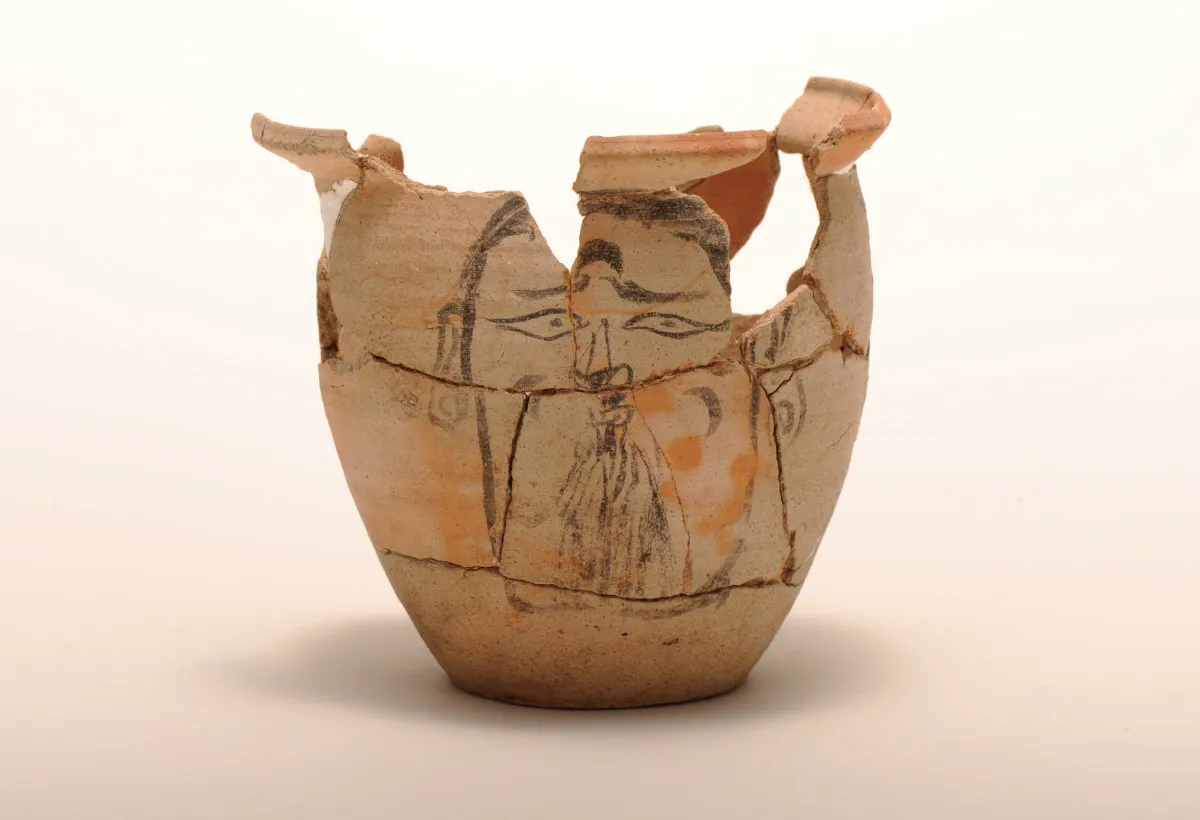
Among the pottery found at Akita Fort are pots painted with human faces in ink. These curious pots date to the first half of the ninth century and are thought to have been used as a form of purification: it was believed that by expelling one’s breath into one of these sealed pots and throwing it into a pond or stream, impurities in the body would be “washed away.” Wooden strips cut in the shape of the human body have also been discovered and likely served a similar purpose.
PICK UP
- Name
- Akita City History Museum of Akita Fort Ruins
- Location
- 9-6 Terauchi Yakeyama, Akita-shi, Akita-ken 011-0907
- Business hours
- 9:00~16:30(New Year's holiday closure)
- Tel
- 018-845-1837
Wooden Tablets
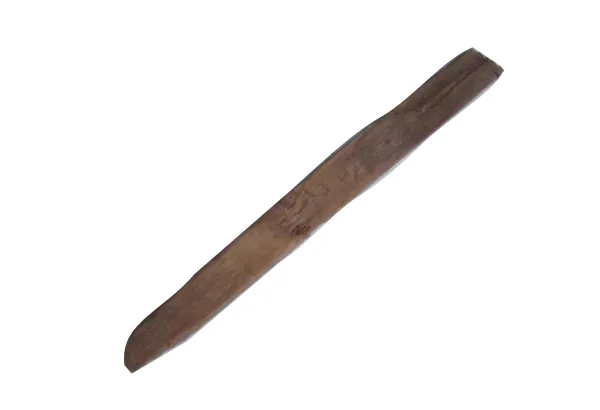
Over 300 small wooden tablets inscribed with ink, recording details about administrative affairs at Akita Fort, have been recovered from the site. The tablets were used for official communications and records, such as reports made by government officials and lists or labels of goods included in a particular shipment. They could be reused multiple times by shaving off the top layer of wood to reveal a blank layer of wood below. Compared to paper, which could generally only be used once, the tablets were a practical tool for daily communication and record keeping inside the fort.
The tablets also provide insight into the daily lives of the officials stationed at Akita Fort. For example, one tablet contains a request for sake to be delivered to a local craftsperson as payment. Another tablet appears to have been used for writing practice: each character is written several times in a row, similar to the way Japanese students practice writing today. The collection of characters reveals that the owner of the tablet used a text by the celebrated Chinese poet and prince Cao Zhi (192–232) as a reference.
PICK UP
- Name
- Akita City History Museum of Akita Fort Ruins
- Location
- 9-6 Terauchi Yakeyama, Akita-shi, Akita-ken 011-0907
- Business hours
- 9:00~16:30(New Year's holiday closure)
- Tel
- 018-845-1837
Armor and Swords
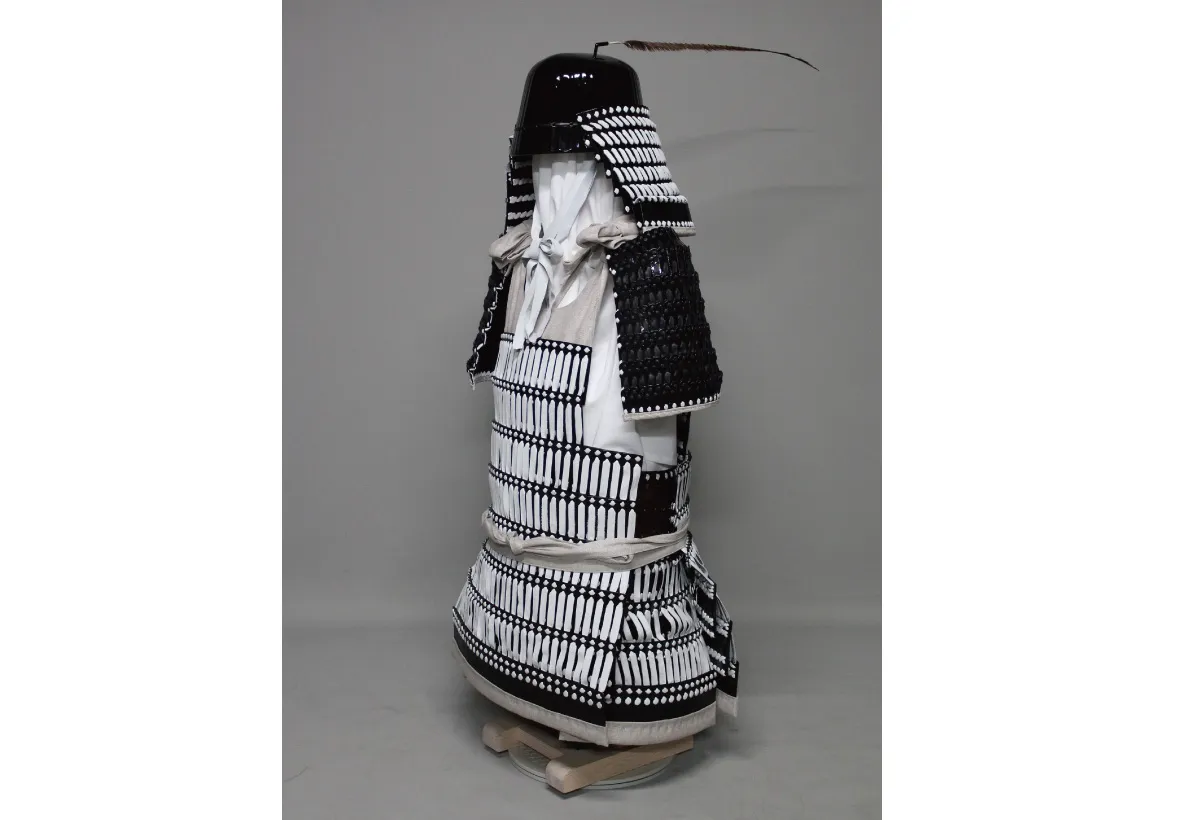
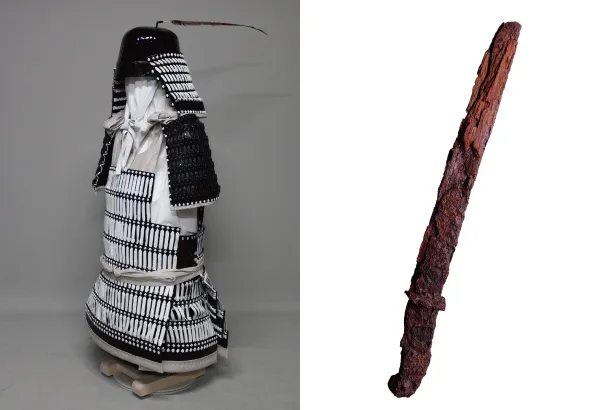
As the Japanese imperial court extended its power northward, conflict with the Emishi, the indigenous peoples who lived in the region, was inevitable. Warriors were stationed at Akita Fort to quell uprisings and ensure the court’s control of the area. Remnants of these warriors’ armor and weapons have been unearthed at the fort.
Until around the eighth century, one common type of armor was made from small strips of iron laced together in rows using leather or fabric cord. However, the resulting armor was heavy, making it difficult for the wearer to move. The set unearthed near Akita Fort was made by lacing together strips made from an organic material thought to be leather. It is the earliest surviving example of this lighter, more flexible armor. Its design would become the basis for the armor worn by warriors beginning in the tenth century.
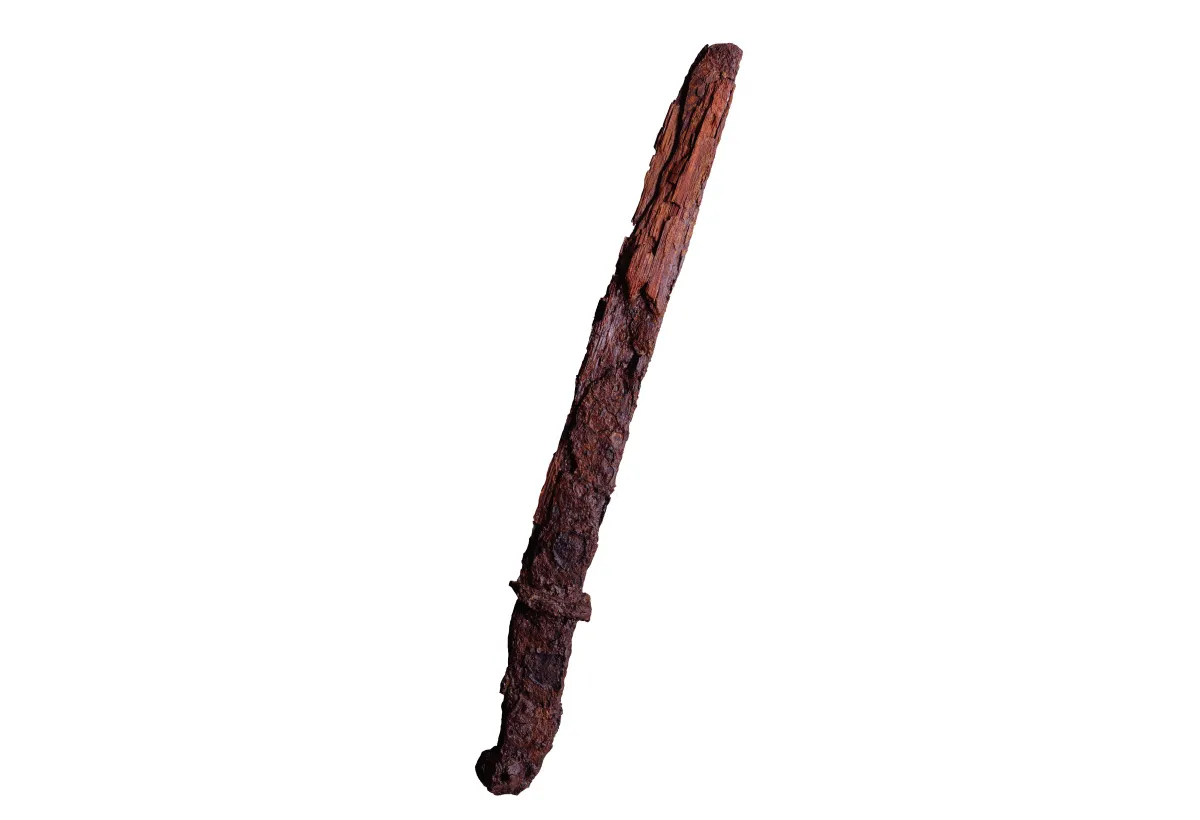
The weapons found among the excavations of Akita Fort are typical of those used in the ninth century. They have straight blades, unlike the curved blades of most Japanese swords from later periods. Some of the excavated swords have a decorative knob on the end of the handle, a style of ornamentation that was popular among the Emishi. It is possible that the collection of swords recovered from the site includes both Yamato and Emishi swords, offering a glimpse into the weaponry that may have been used during conflicts such as the major Emishi uprising in 878.
PICK UP
- Name
- Akita City History Museum of Akita Fort Ruins
- Location
- 9-6 Terauchi Yakeyama, Akita-shi, Akita-ken 011-0907
- Business hours
- 9:00~16:30(New Year's holiday closure)
- Tel
- 018-845-1837
Administrative Compound / Advanced Toilet Technology
Administrative Compound
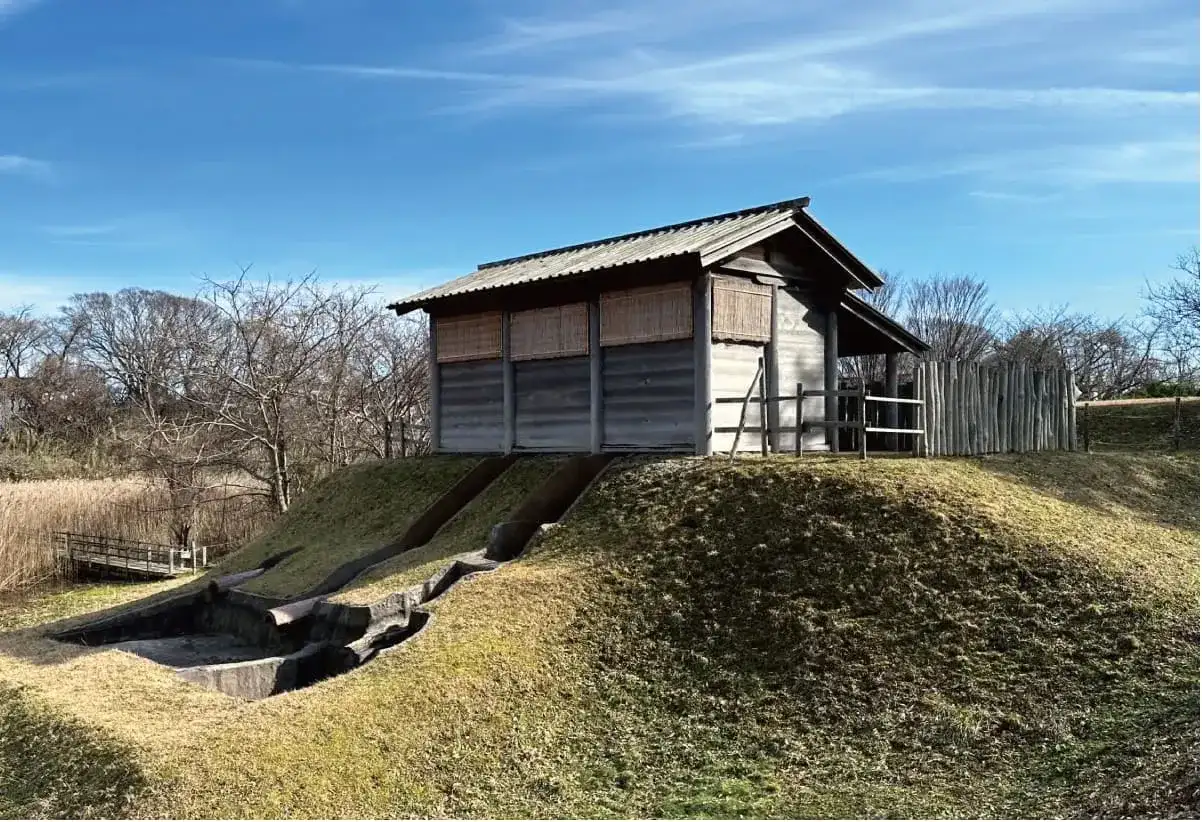
The administrative compound was the center of operations at Akita Fort. It contained several buildings and a large courtyard for hosting formal ceremonies. Originally, the compound was surrounded by an earthen wall topped with ceramic tiles. The walls were expensive to maintain and were intended to impress visiting delegations by demonstrating the wealth of the Japanese government. However, military defense eventually became more important than diplomacy and the earthen walls were completely replaced with wooden walls by the early 800s.
Advanced Toilet Technology
Remains of pour-flush toilets were found on the eastern outskirts of Akita Fort. This was a great luxury in the eighth century. Although the origin of the technology is unknown, the rarity of pour-flush toilets during this period in Japan, as well as the fort’s ties with foreign delegations, raises the possibility that it was introduced from mainland Asia.
Organic remains found in the drainage ditch provide clues about who likely used the toilets. Archaeologists discovered eggs from a type of tapeworm found in pork within the organic remains. As pork consumption was rare in the Japanese archipelago at this time, the presence of this parasite suggests that the toilets were used by guests from areas where pork was eaten, such as mainland China or the Korean peninsula.
PICK UP
- Name
- Akita Fort Ruins
- Location
- 5 Terauchi Ohata, Akita-shi, Akita-ken 011-0939
- Tel
- 018-845-1837
Koshiō Shrine
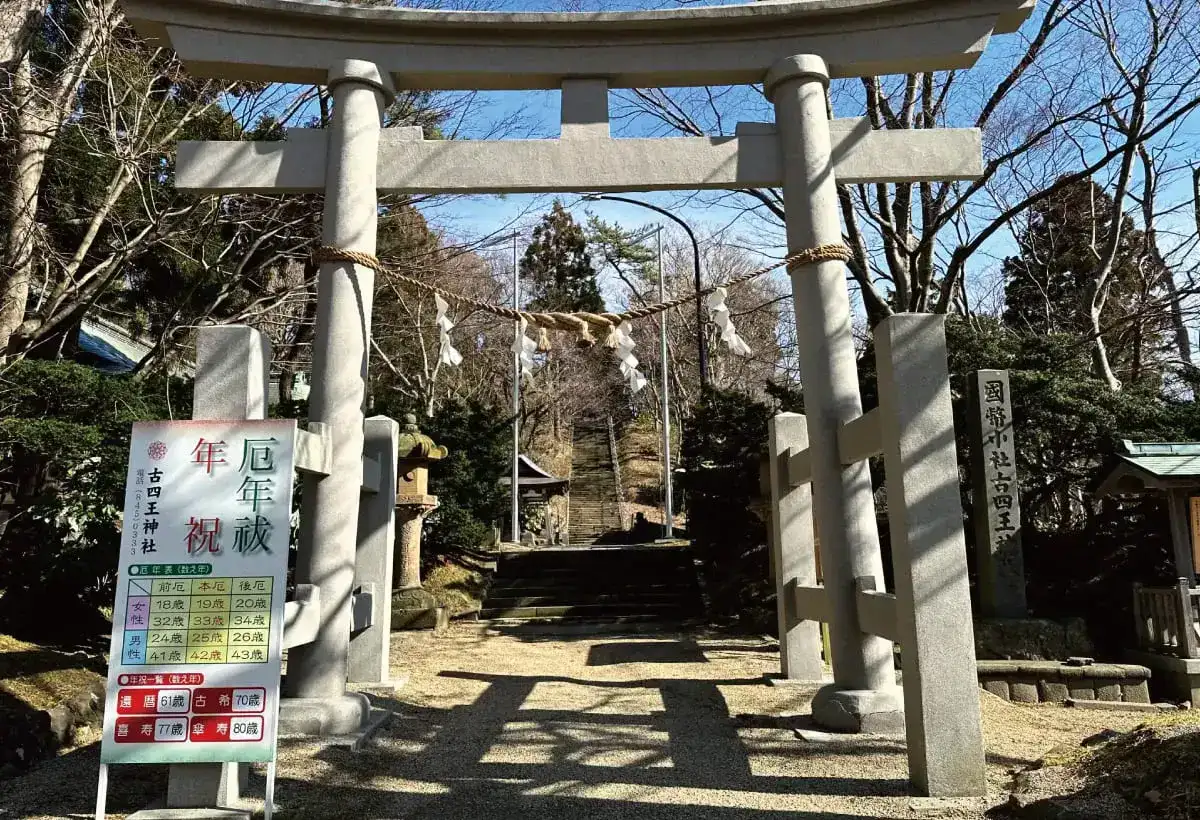
Koshiō Shrine is dedicated to two Shinto deities, Takemikazuchi no Mikoto and Ōhiko no Mikoto. These deities are associated with ancient tales of military campaigns to expand the emperor’s control across the Japanese archipelago. The shrine was built facing the north, possibly as a symbolic gesture of the northward expansion of the Japanese imperial court. It is thought to share a close historical relationship with Akita Fort, a nearby imperial outpost established in 733 to strengthen control over the area.
Centuries ago, residents of the area around Koshiō Shrine made a vow to never consume meat, eggs, or milk. Although the origins of this vow are unclear, it is believed that it began as a devotional practice. During the first seven days of the New Year, villagers also abstained from drinking alcohol and even eating food that had been cooked outside the village. The taboo against eating meat, eggs, and milk continued well into the mid-twentieth century.
PICK UP
- Name
- Koshiō Shrine
- Location
- 1-5-55 Terauchi Kozakura, Akita-shi, Akita-ken 011-0909
- Tel
- 018-845-0333
Tsuchizaki Minato Hikiyama Matsuri Festival
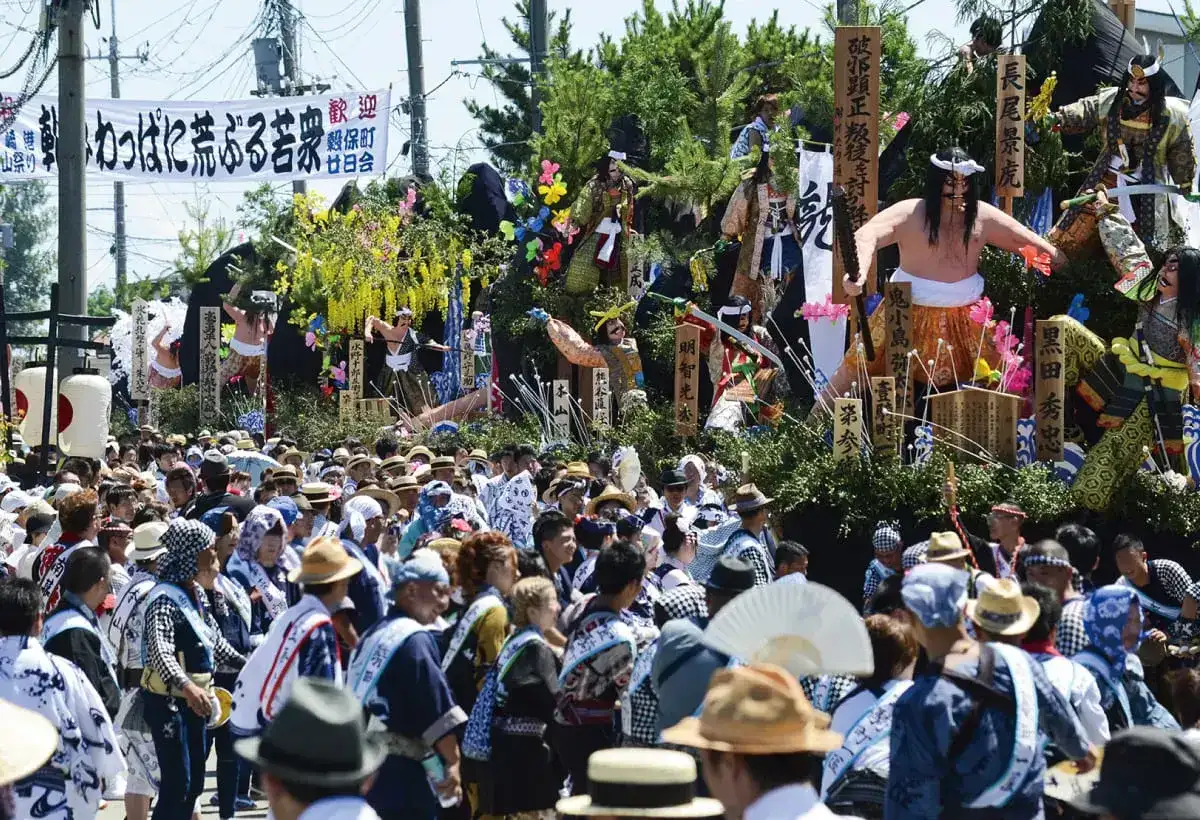
The Tsuchizaki Minato Hikiyama Matsuri Festival is the most meaningful event of the year for Tsuchizaki’s residents. It is a time to celebrate and reunite with family and friends, even more so than the New Year’s holidays. The festival officially begins on July 1 and honors the deities of Tsuchizaki Shinmeisha Shrine. The main event, however, is on July 20 and 21, when teams of residents pull decorated wooden floats called hikiyama through the streets.
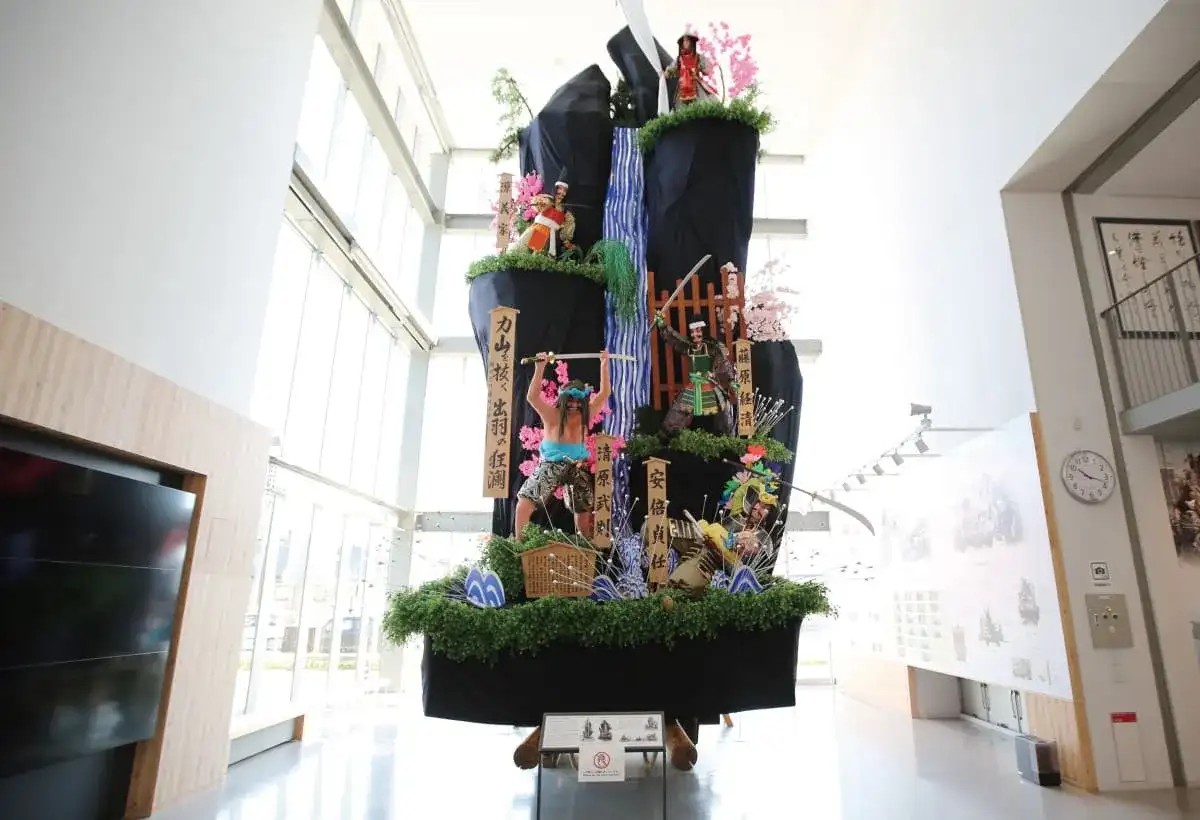
Each hikiyama float is roughly 5 meters tall and weighs 3 to 4 metric tons. The front of each float is decorated with large figures of famous warriors acting out a well-known historical scene, while the back is outfitted with a covered platform where musicians play traditional music. Above the musicians’ platform, a wooden plaque inscribed with a humorous poem and a smaller figure—often of a modern politician or celebrity—offer a satirical take on current events. All the decorations are remade each year and dedicated anew to the deities of the shrine.
Given the weight of the hikiyama floats, a large number of people are needed to get the wheels rolling. However, the floats do not have brakes or a steering wheel. Instead, the teams in charge of the floats use flexible wooden poles to hoist and guide the hikiyama. By briefly jamming the poles under the wheels, they can turn or slow down the float. The wooden wheels of the floats turn on their wooden axles with a high-pitched screeching sound that is considered the signature sound of the festival. The axles must be regularly doused with oil to stop the friction of the wood from generating too much heat.
Although historical records mention that a portable shrine appeared in Tsuchizaki’s festival in 1705, the first mention of hikiyama floats comes from a 1789 travel diary. In this diary, the merchant and scholar Tsumura Sōan (1736–1806) describes streets filled with 40 portable shrines and floats. The hikiyama also caught the attention of British traveler Isabella Bird (1831–1904), who wrote about the festival in her 1880 book, Unbeaten Tracks in Japan. In recognition of both its long history and its significance for the community, the Tsuchizaki Minato Hikiyama Matsuri Festival was designated an Important Intangible Folk Cultural Property in 1997 and inscribed as UNESCO Intangible Cultural Heritage of Humanity in 2016.
PICK UP
- Name
- Tsuchizaki Minato Hikiyama Matsuri Festival
- Venue
- Tsuchizaki District, Akita City
- Event period
- 7/20・7/21
- Tel
- 018-845-2264(weekdays 9:30-17:00)
Sounds of the Tsuchizaki Minato Hikiyama Matsuri Festival
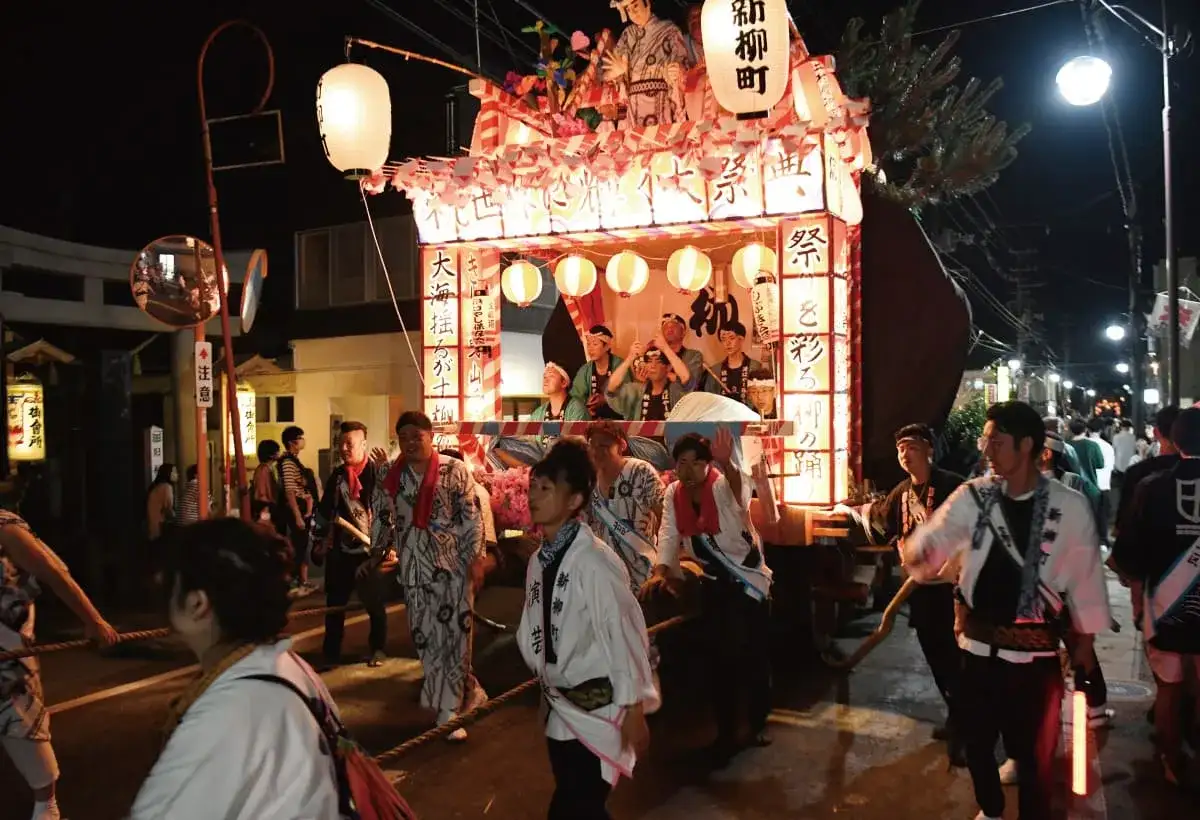
Music fills the air during the Tsuchizaki Minato Hikiyama Festival amid the shouts of the crowd and the screeching of wooden wheels turning. While the hikiyama are in motion, musicians riding on the back of each float play a type of traditional music known as minato bayashi, which is unique to Tsuchizaki. Minato bayashi is performed with a yokobue (wooden flute), taiko drums, the three-stringed shamisen, and a small metal gong. Musicians select from a repertoire of five different pieces to match the atmosphere during different parts of the festival parades. Until the mid-1940s, the melodies were passed down strictly from master to student, but they are now taught to anyone who wants to learn.
When the floats are stopped along the route, participants perform various dances, including the dance to a humorous local folk song called “Akita Ondo.” The song’s amusing lyrics are often improvised, and contemporary variations usually mention local delicacies or sights from the festival. Recordings and video of minato bayashi festival music and “Akita Ondo” song and dance are exhibited at the Tsuchizaki Minato Port Area Historical Museum.
PICK UP
- Name
- Tsuchizaki Minato Hikiyama Matsuri Festival
- Venue
- Tsuchizaki District, Akita City
- Event period
- 7/20・7/21
- Tel
- 018-845-2264(weekdays 9:30-17:00)
Tsuchizaki Minato Port Area Historical Museum
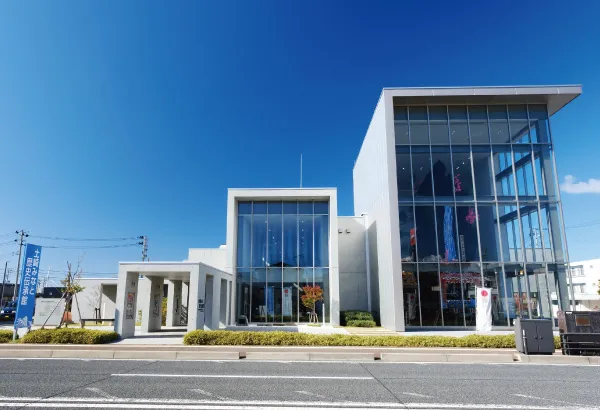
The Tsuchizaki Minato Port Area Historical Museum recounts the history of Tsuchizaki as a center for trade and commerce. Interactive panels explain the development of the port, particularly focusing on the mid-1700s to the early 1900s, when fleets of merchant ships traveled along the Sea of Japan. There is also a separate room dedicated to chronicling the damage caused by a major air raid at the end of World War II (1939–1945).
Part of the museum is dedicated to explaining the Tsuchizaki Minato Hikiyama Matsuri Festival, which is held by Tsuchizaki Shinmeisha Shrine. During the festival, a parade of wooden-wheeled hikiyama floats decorated with figures of samurai warriors are pulled through the streets by members of the community. A towering 11.5-meter-tall replica of one of these floats is on display in the museum’s atrium. Before the construction of electric lines, hikiyama over 20 meters tall once paraded the streets during the festival. Although it is no longer possible to build such hikiyama today, records and photographs of these impressive floats on exhibit at the museum provide insight into the spectacle of this local festival, which was inscribed as Intangible Cultural Heritage of Humanity by UNESCO in 2016.
The Tsuchizaki Minato Port Area Historical Museum is about a 15-minute walk from Port Tower Selion.
PICK UP
- Name
- Tsuchizaki Minato Port Area Historical Museum
- Location
- 3-10-27 Tsuchizakiminato Nishi, Akita-shi, Akita-ken 011-0945
- Business hours
- 9:00~17:00
- Closed days
- Tuesday(If it is a public holiday, the next day)
Year end and new year(12/29-1/3) - Tel
- 018-838-4244
The Port Town of Tsuchizaki
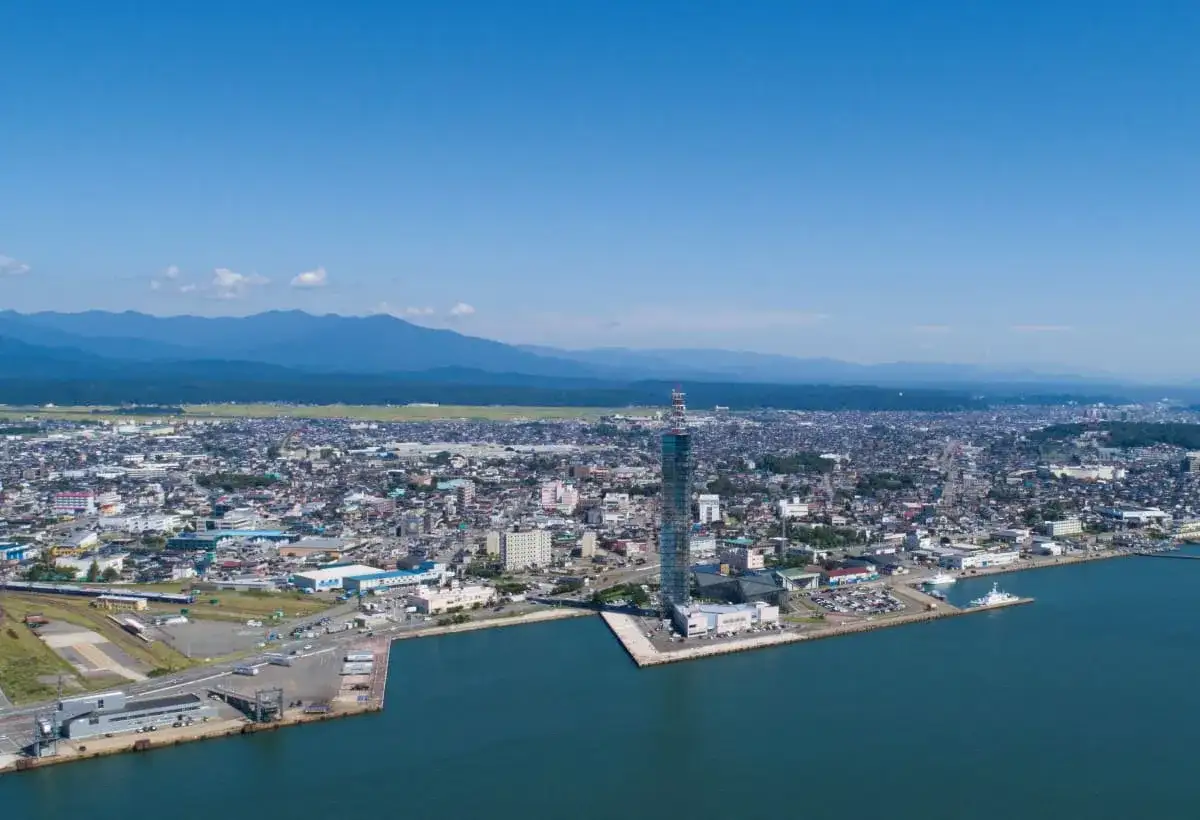
This port area has been a place of both domestic and international exchange since the 700s. Tsuchizaki and the modern Akita Port trace their history to the port built at the mouth of the Omono River to serve Akita Fort, the northernmost outpost of the Japanese government at the time. The fort fell into disuse in the 900s, but Tsuchizaki and the port continued to expand.
By the 1700s, Tsuchizaki was an important stop on the coastal shipping route between the city of Osaka and the frontiers of Hokkaido. Both northbound and southbound merchant ships stopped at Tsuchizaki stocked with goods from all over Japan. As traditional sailing ships gave way to modern steamships in the early 1900s, local entrepreneurs recognized the urgent need for better infrastructure. The port was modernized and renamed Akita Port in 1941. Today, it is still an important hub for people, goods, and technological exchange.
Despite these shifts in era and technology, the Tsuchizaki Minato Hikiyama Matsuri Festival continues to bring the community together annually. During the festival’s impressive finale, teams of local residents pull large wooden floats called hikiyama through the streets. The creaking of the hikiyama wheels and the excited shouts of participants resonate through the streets, embodying the lively port-town spirit that continues to thrive in Tsuchizaki.
PICK UP
- Name
- Tsuchizaki Minato Port Area Historical Museum
- Location
- 3-10-27 Tsuchizakiminato Nishi, Akita-shi, Akita-ken 011-0945
- Business hours
- 9:00~17:00
- Closed days
- Tuesday(If it is a public holiday, the next day)
Year end and new year(12/29-1/3) - Tel
- 018-838-4244
Arrival of Kitamaebune
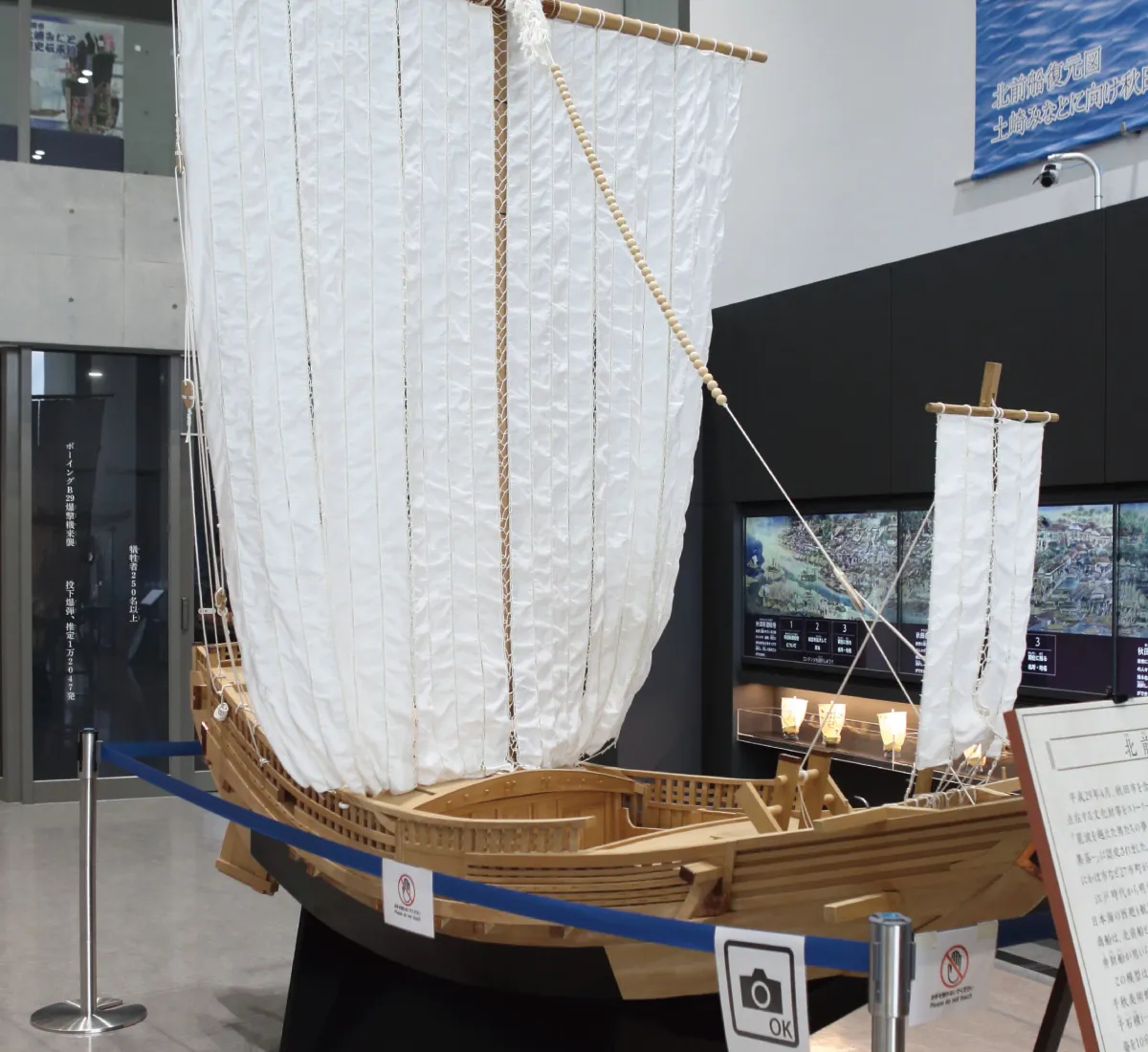
Tsuchizaki thrived from the mid-1700s through the early 1900s as an important stop on the trade route between Osaka and Hokkaido. Collectively known as kitamaebune (northbound ships), the wooden merchant ships that traveled this route connected the towns and cities on the Sea of Japan, promoting the exchange of goods, culture, and information. The wealth generated by this trade made many Tsuchizaki merchants richer than members of the warrior class, their superiors in the social hierarchy.
Although the route was first navigated in the 1670s, kitamaebune trade began in earnest in the mid-1700s, when independent merchants began to charter their own ships to transport goods. The merchants did not simply carry cargo from Osaka to Hokkaido; they actively bought and sold goods at each port along the way. They used their knowledge and experience to take advantage of price differences along the route and mark up their goods accordingly. Their trading strategy proved to be extremely lucrative: One round trip could bring in profits as high as ¥100 million in today’s currency.
One of the most sought-after items was the Pacific herring caught off the coast of Hokkaido. In addition to serving as a food source, herring could be fermented to create a rich fertilizer for farming. The fish was also used to produce lamp oil, which was valuable in a time before electricity. These processed goods could be sold for five to ten times more than the cost of the fish.
Historical Sites Around the Port
Tsuchizaki is depicted as a bustling port in the Akita kaidō emaki (Scenes Along the Akita Road), an illustrated handscroll created between the late eighteenth and early nineteenth centuries. Attributed to Ogitsu Katsutaka (1746–1809), the set of three scrolls offers a glimpse of life at the port over 200 years ago. Several of the structures depicted by Ogitsu remain a part of the landscape today.
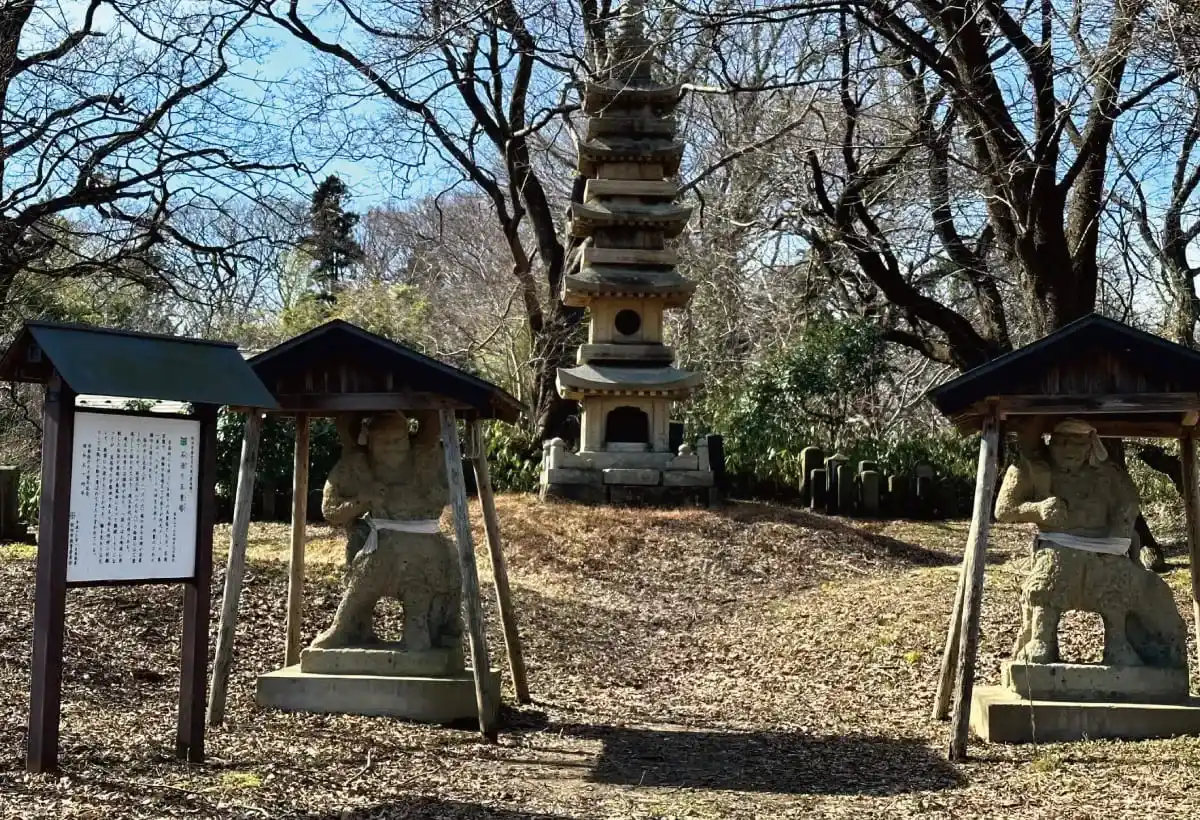
One scene in the handscroll depicts a stone stupa on top of a hill overlooking the coast. This stupa is said to have been a landmark for sailors as they entered the port. Erected by a wealthy merchant in 1643, the original monument was destroyed by earthquakes in 1804 and 1810. A matching stupa that had been created the same year as the original was moved to the site in 1967.
The handscroll also depicts the granite pagoda at Hōtōji Temple. The pagoda was built sometime between the seventeenth and eighteenth centuries, following an incident involving a merchant’s ship that had been caught in a sudden storm on the approach to Tsuchizaki. It is said that the vessel was on the verge of becoming shipwrecked when a mysterious light suddenly appeared near the temple, guiding the crew safely to land. Believing that the guardian deity of the temple had provided this guiding light, the merchant donated the funds to build the pagoda in gratitude.
At the Tsuchizaki Minato Port Area Historical Museum, visitors can browse an interactive digital version of the handscroll to locate other sites that still dot the landscape today.
PICK UP
- Name
- Tsuchizaki Minato Port Area Historical Museum
- Location
- 3-10-27 Tsuchizakiminato Nishi, Akita-shi, Akita-ken 011-0945
- Business hours
- 9:00~17:00
- Closed days
- Tuesday(If it is a public holiday, the next day)
Year end and new year(12/29-1/3) - Tel
- 018-838-4244
Tsuchizaki Air Raid
Tsuchizaki was devastated by an air raid during the closing hours of World War II in 1945. The Nippon Oil refinery located near the port was one of the largest oil refineries in the country, making it a critical target for the United States. Over 250 people were killed and more than 200 injured during the raid and in the subsequent fires, which lasted nearly a week.
The attack began on August 14 around 10:30 p.m. and lasted until the early hours of the following morning. The 315th Bombardment Wing of the US Army Air Forces dropped 12,047 bombs on Tsuchizaki. Most of the 132 planes were Boeing B-29 Superfortress bombers, the same type that had been used to drop the atomic bombs on Hiroshima and Nagasaki the week before. Less than 12 hours after the attack, Emperor Hirohito (1901–1989) announced Japan’s surrender. It was the final air raid of World War II.
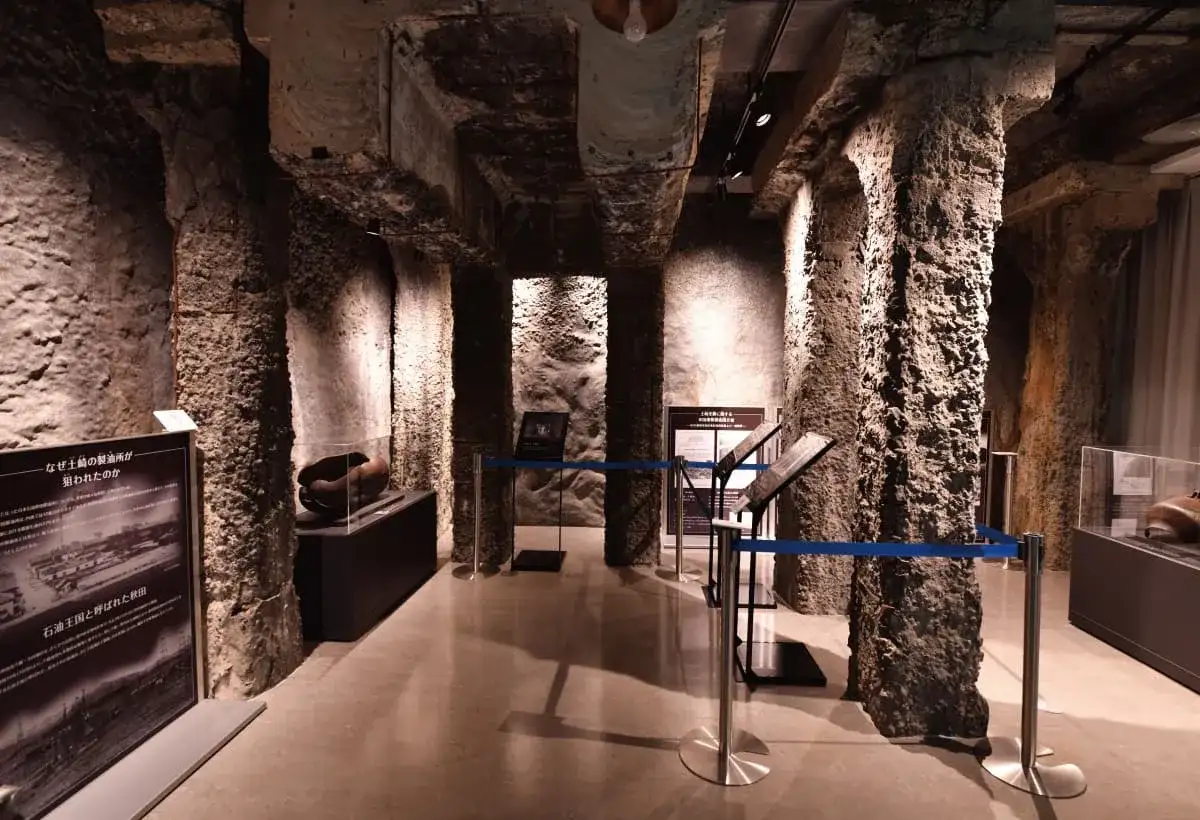
A single warehouse near the oil refinery survived the bombing. When the building was demolished in 2017, some of the damaged reinforced-concrete pillars and ceiling beams were installed at the Tsuchizaki Minato Port Area Historical Museum. The broken and partly melted pillars are a lasting reminder of this tragic history.
PICK UP
- Name
- Tsuchizaki Minato Port Area Historical Museum
- Location
- 3-10-27 Tsuchizakiminato Nishi, Akita-shi, Akita-ken 011-0945
- Business hours
- 9:00~17:00
- Closed days
- Tuesday(If it is a public holiday, the next day)
Year end and new year(12/2〜1/3) - Tel
- 018-838-4244
Tsuchizaki Shinmeisha Shrine
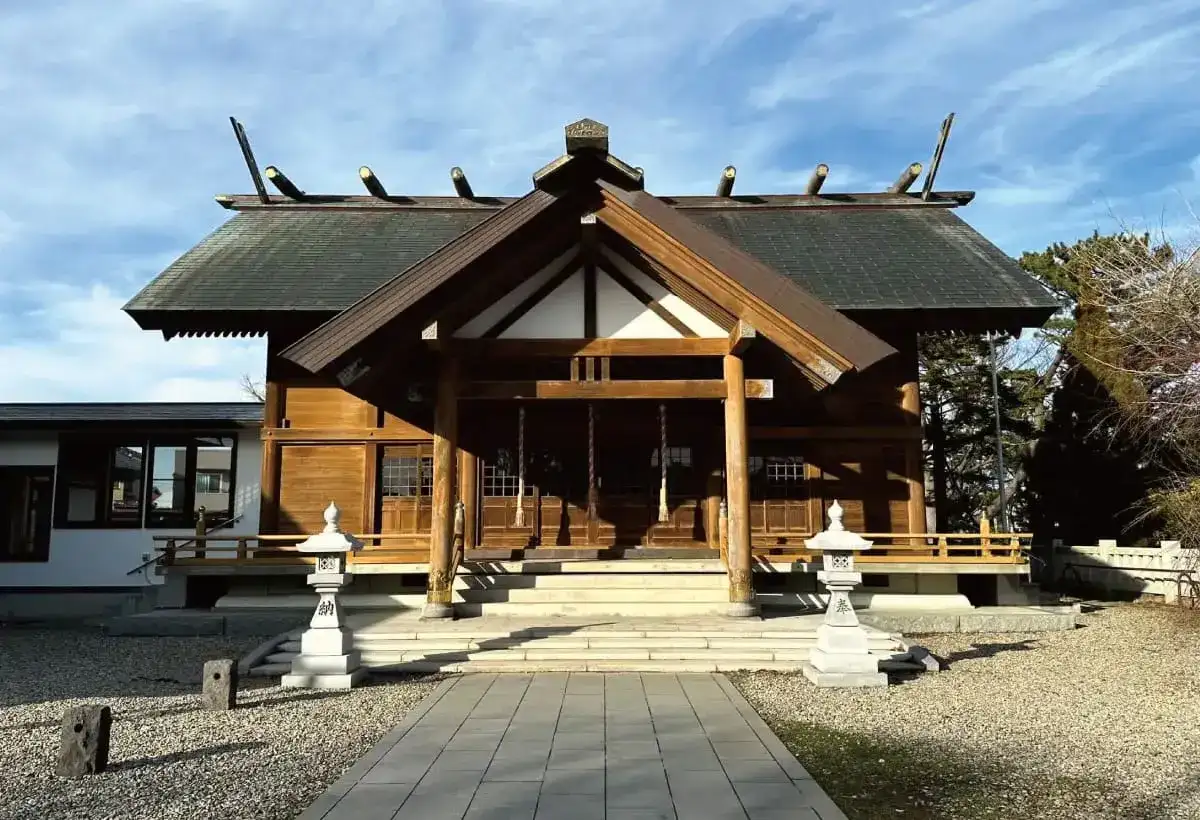
Tsuchizaki Shinmeisha Shrine is dedicated to Amaterasu Ōmikami, the Shinto sun deity who is considered the ancestor of the imperial family. The shrine’s most important annual festival is the Tsuchizaki Minato Hikiyama Matsuri, which is renowned for its two-day parade of large wooden floats pulled through the streets. Although the main festival activities are held on July 20 and 21, various rituals and offerings begin in May and last through September. The festival was inscribed as Intangible Cultural Heritage of Humanity by UNESCO in 2016.
The shrine was established in 1620 by Kawaguchi Sōjiro (dates unknown), the kimoiri, or town head, of Tsuchizaki. Kawaguchi received a request for a shrine from residents who were concerned that there was no place near the port to pray and was granted permission from the daimyo lord Satake Yoshinobu (1570–1633) to build Tsuchizaki Shinmeisha Shrine. The shrine was constructed on the former site of Minato Castle, the seat of government of the daimyo lord who had preceded Satake.
PICK UP
- Name
- Tsuchizaki Shinmeisha Shrine
- Location
- 3-9-37 Tsuchizakiminato Chuo, Akita-shi, Akita-ken 011-0946
- Tel
- 018-845-1441
Modernization of the Port
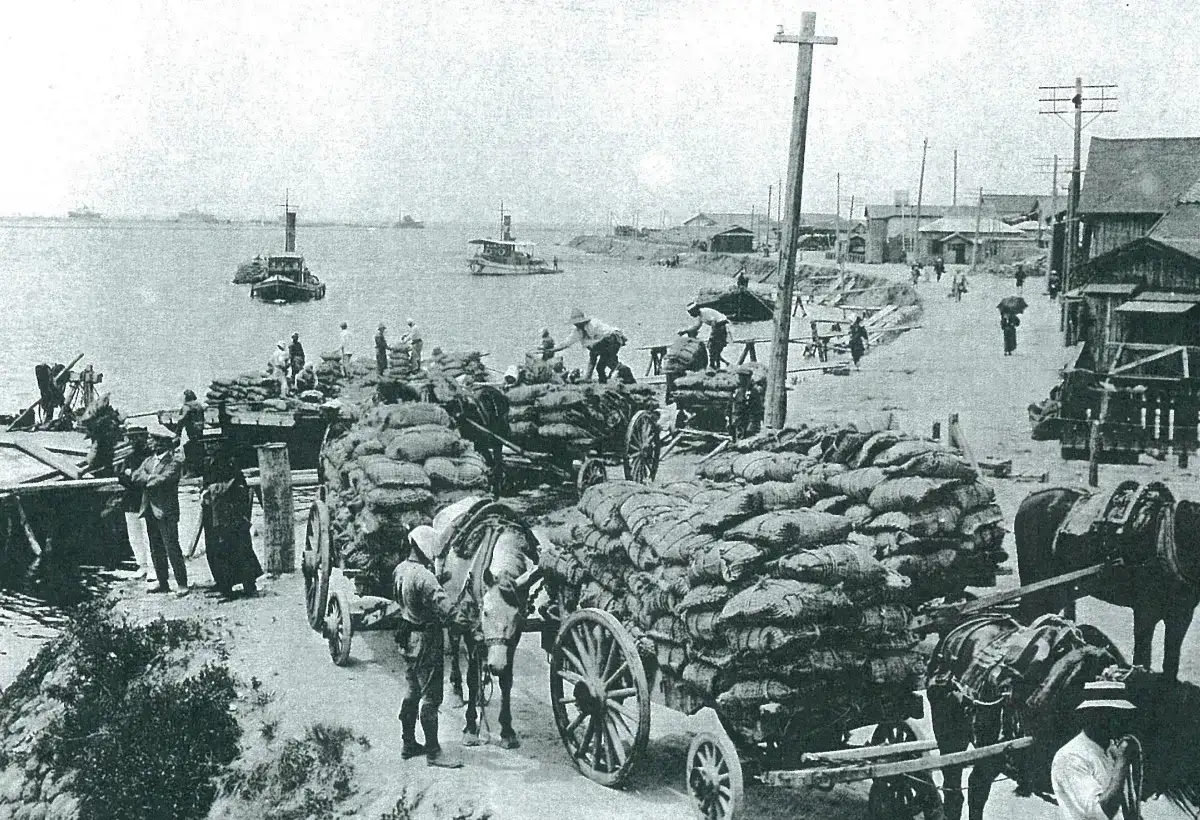
The main economic activity of Tsuchizaki until the late 1800s centered around its role as a port for kitamaebune merchants, who transported goods for trade along the Sea of Japan. Social and political change brought about by the Meiji Restoration of 1868, however, triggered a shift to large-scale industrial manufacturing. The new imperial government repealed Japan’s closed-border policy and eagerly imported Western technologies in pursuit of industrialization. In Tsuchizaki, this meant the expansion of nearby oil fields and the modernization of the port.
By the early 1900s, sailing ships had been replaced by steamships, which were larger, faster, and better at navigating rough seas, including the stormy waters of the Sea of Japan. However, Tsuchizaki’s relatively shallow harbor could not accommodate large steamships and their cargo had to be unloaded onto smaller boats before being brought ashore, slowing down work at the port. To address this, local business leaders cooperated to build a wharf for steamships in 1902. The facilities were expanded over time, and when Tsuchizaki was incorporated into the city of Akita in 1941, the name of the port was changed from Tsuchizaki Port to Akita Port.
A major oil refinery was built at the port to process the petroleum extracted from nearby oil fields. Akita Prefecture was one of the largest oil-producing regions in Japan in the first half of the twentieth century, accounting for nearly 70 percent of domestic output from 1945 to 1955. Given the importance of oil for transportation and manufacturing, the refinery made Tsuchizaki a target during World War II (1939–1945). In the closing days of the war, an air raid caused extensive damage to the port.
PICK UP
- Name
- Akita Port
Akita Port: Today and Beyond
Today, Akita Port is a center for shipping, manufacturing, and tourism, and it continues to be a key point of contact between Japan and the world.
While rebuilding after World War II (1939–1945), local officials realized a breakwater was needed to block the Sea of Japan’s rough currents. This was a major challenge, as raising funds for large construction projects was nearly impossible in the early years of the Allied Occupation (1945–1952). Instead of creating a breakwater from scratch, officials decided to make one by sinking three warships that sat abandoned at the dock, creating a 268-meter breakwater that protected the port until it was demolished in 1975 during port expansion.
Akita Port currently sustains various commercial industries. The shipping-container terminal facilitates imports and the export of goods from northeastern Japan. Cargo ships arriving from South Korea and China stop at the port several times per week. Taking advantage of the easy access to imported raw materials, several manufacturing plants are located nearby, including a paper mill and a metal refinery.
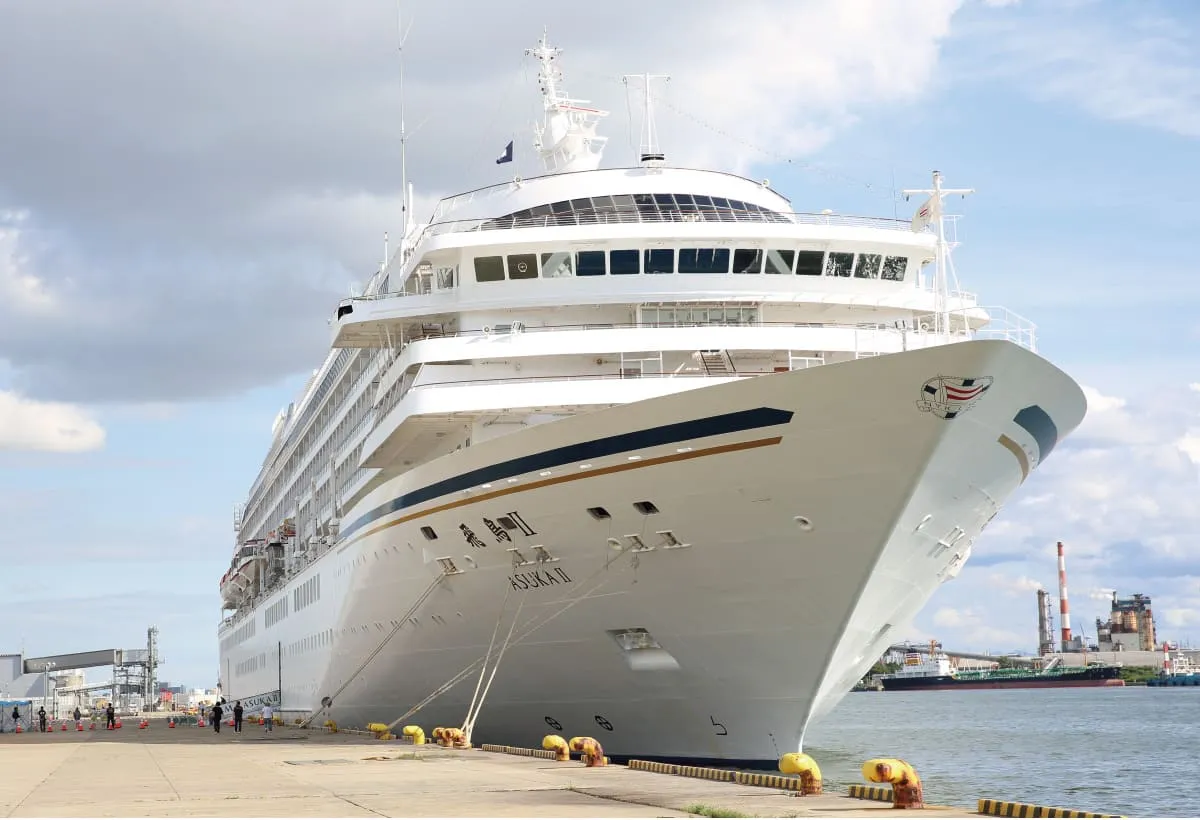
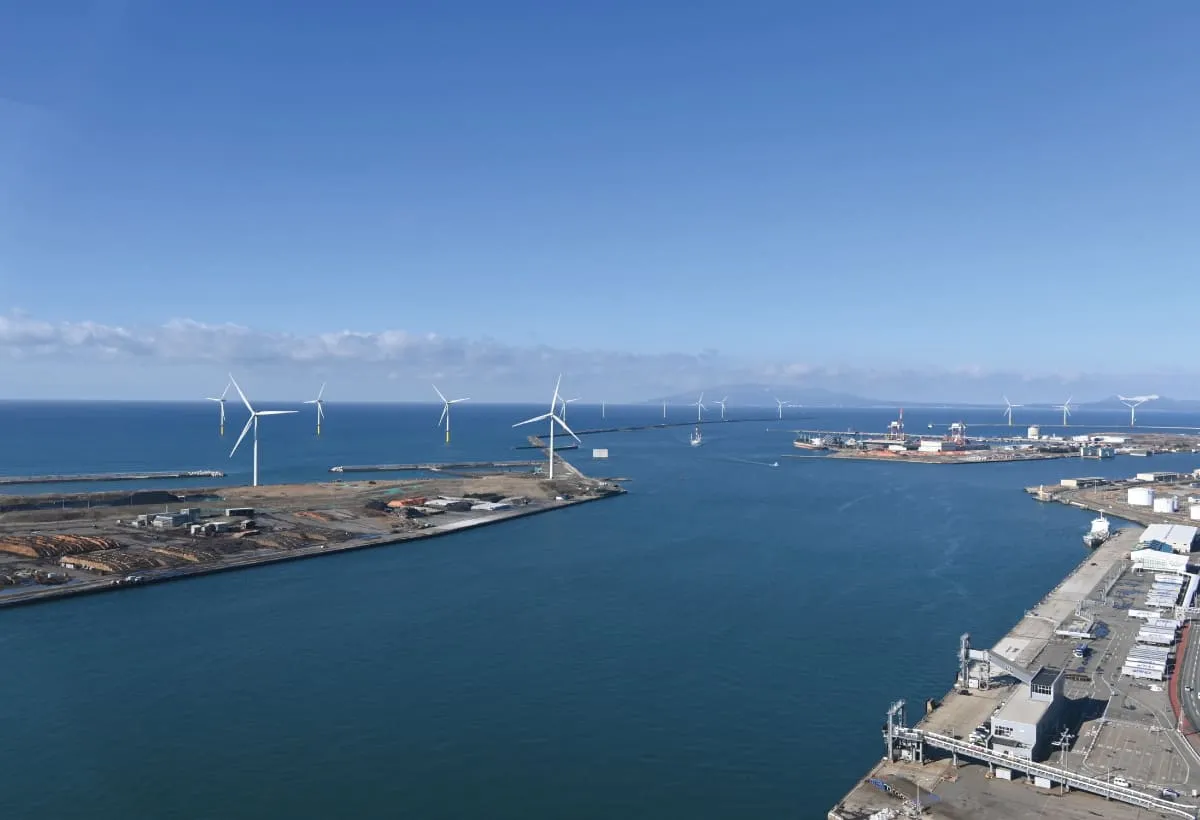
Although diplomatic delegations like those that once visited Akita Fort are ancient history, Akita Port welcomes tourists from domestic and international cruise ships. To ensure a sustainable future for the commercial and cultural exchange that has defined the port for centuries, one of the country’s first full-scale offshore wind farm was established here in 2023.
PICK UP
- Name
- Akita Port
Offshore Wind Energy at Akita Port
Strong winds off the Sea of Japan blow over Akita Prefecture throughout the year. The prefecture has taken advantage of these high wind conditions to install over 280 onshore wind turbines since 2000. The recent addition of offshore wind turbines is a crucial step in realizing a carbon-neutral society.
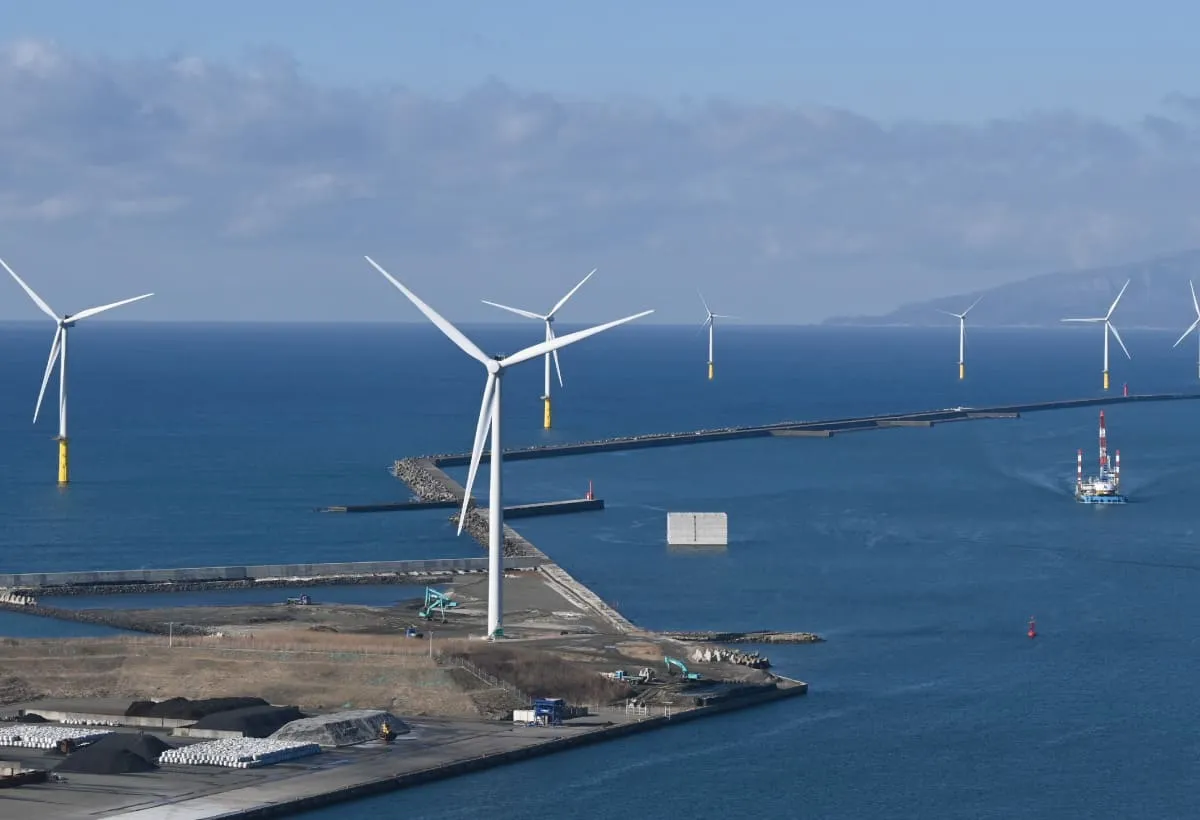
Akita Port’s shallow seabed and extensive shoals made it an ideal site for one of the first full-fledged offshore wind farms in Japan. The 13 wind turbines began operation in January 2023, and each turbine generates enough electricity to power roughly 4,000 households.
Although there are challenges to building in the ocean, offshore wind turbines do not have to work around existing buildings or infrastructure. In addition, offshore wind farms make it possible to build larger wind turbines unobstructed by natural terrain. The average onshore turbine is around 120 meters tall, while the offshore turbines at Akita Port are 150 meters tall. These bigger turbines, which are slightly taller than Port Tower Selion, can generate a larger amount of energy more efficiently.
Gateway to Tsuchizaki: Port Tower Selion
Port Tower Selion has everything visitors need to begin their exploration of Tsuchizaki. Located a short walk from the cruise terminal, the tower has an observation deck with panoramic views of Akita Port. Several restaurants serve lunch and sweets, and a shopping area offers local delicacies and traditional crafts. Between spring and autumn, a stall near the entrance of the tower periodically sells a popular local specialty: a colorful banana- and strawberry-flavored ice cream sculpted in the shape of a rose.
Entrance to the 100-meter-high observation deck is free and affords a bird’s-eye view of the surrounding area, including the coastal and offshore wind turbines that dot the Sea of Japan coast. When the skies are clear, Mt. Chōkai (2,236 m) is visible on the horizon to the south. To the southeast, downtown Akita can be seen in the distance behind the large, forested hill that was once the site of Akita Fort.
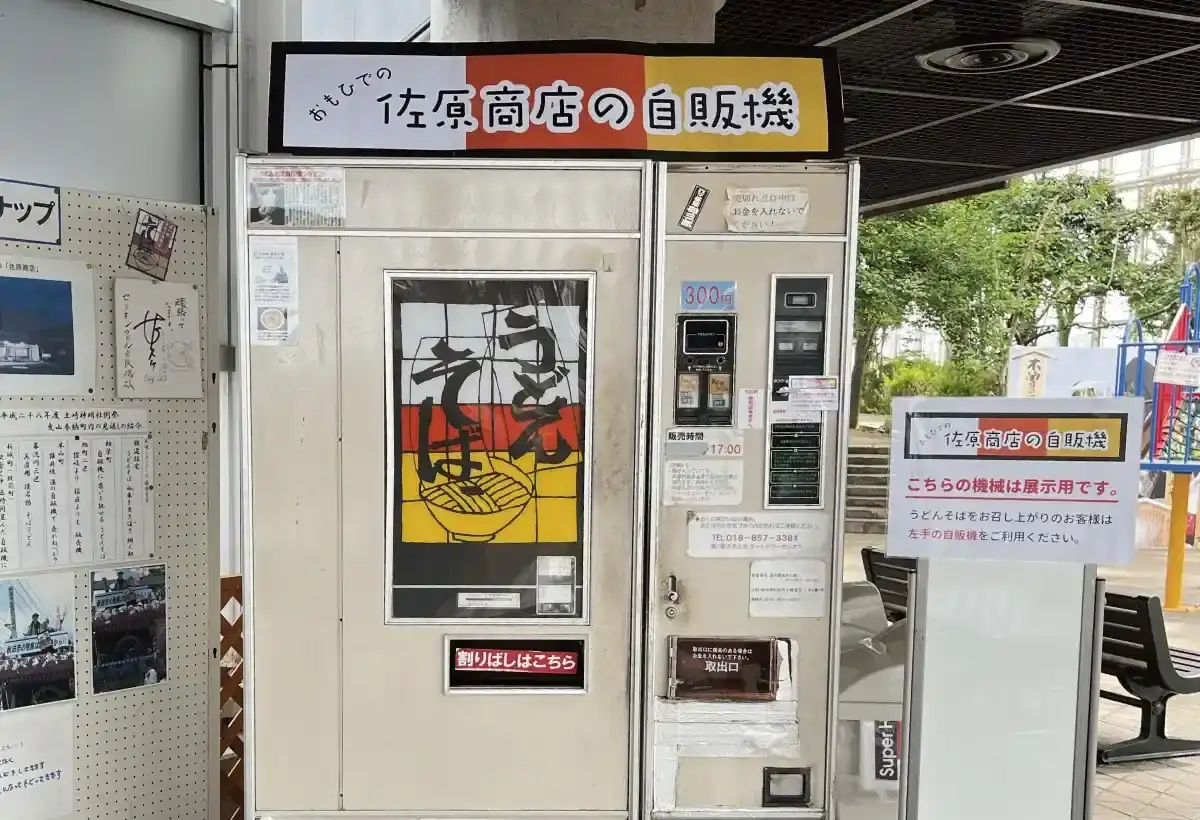
Sahara’s Noodle Vending Machine
One of the most popular attractions at Port Tower Selion is a vending machine that serves bowls of udon and soba noodles in warm broth. This unusual machine originally belonged to a nearby store called Sahara Shōten, which primarily sold food, clothing, and other essentials to the crews of ships that docked at Akita Port. In 1973, its owners set up the machine after noticing a lack of places that offered hot meals to workers at odd hours. The savory broth and locally made noodles have made the vending machine a long-standing symbol of the community.
The vending machine was moved to its current location when Sahara Shōten closed in 2016. Acquiring parts for repairs has become increasingly difficult, as the model has not been produced since 1980. The noodle machine remains popular, however, and it sells around 200 bowls of noodles on a busy day. Broth-flavored ice cream and merchandise featuring the machine’s logo can be purchased at Port Tower Selion.
PICK UP
- Name
- Port Tower Selion
- Location
- 1-9-1 Tsuchizakiminato Nishi, Akita-shi, Akita-ken 011-0945
- Business hours
- 9:00~21:00
- Tel
- 018-857-3381
Sake Brewing in Tsuchizaki
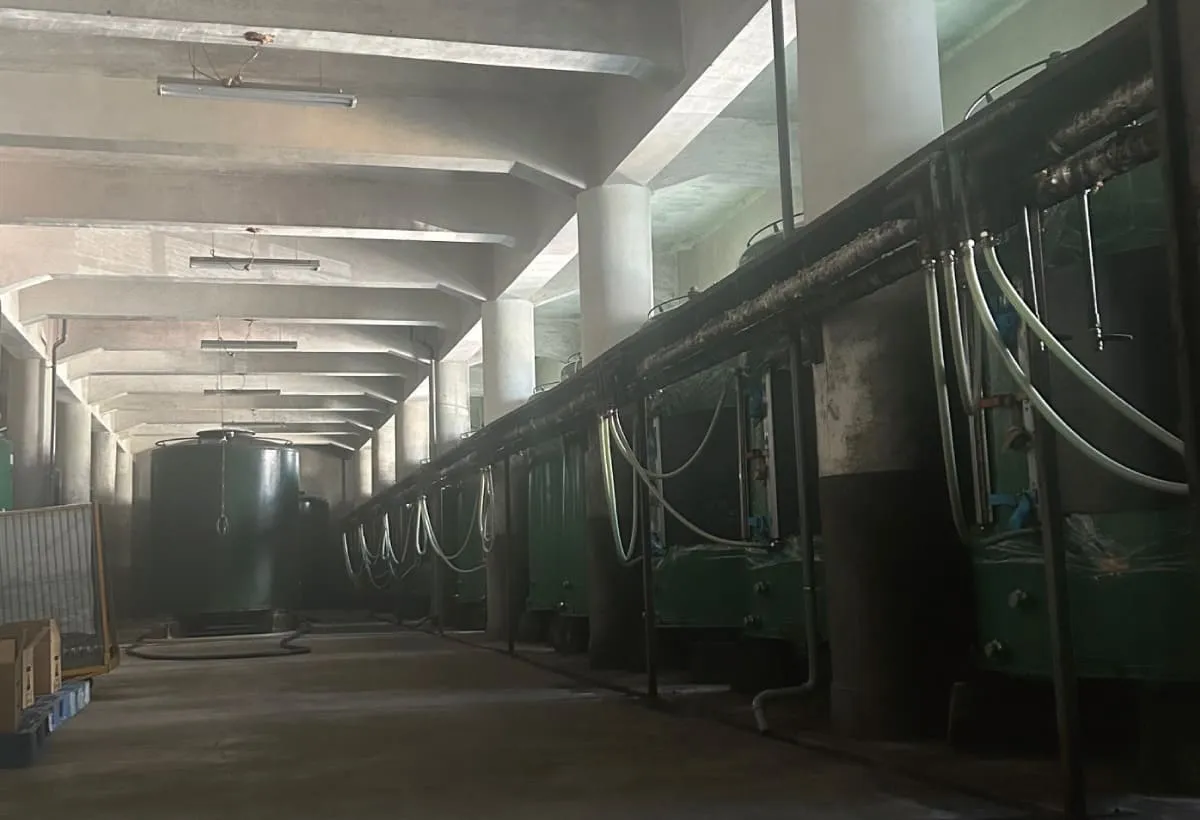
The Naba Shōten sake brewery makes flavorful sake that holds its own against the strong flavors of the local cuisine. The brewery’s most popular brand is called Ginrin, or “silver scales,” a name taken from the lyrics of a traditional folk tune sung by fishermen. Naba Shōten’s sake can be purchased at liquor stores in Tsuchizaki and around Akita Station.
The brewery grew out of an early brewing facility founded in 1807 by a merchant named Naba Sukenari (1772–1837) when he was ordered to brew sake on behalf of the local government. His descendants turned the family business into an independent enterprise in 1871. When the current building was completed in 1928, it was the only brewery in northeastern Japan to be built from reinforced concrete. It was designed by Hanaoka Masatsune (1883–1953), who is known as the father of sake brewing in Akita for developing a method of fermenting rice at low temperatures over a prolonged period.
PICK UP
- Name
- Naba Shōten
- Location
- 1-16-41 Tsuchizakiminato Chuo, Akita-shi, Akita-ken 011-0946
- Business hours
- 8:40~17:30(Closed on Saturdays and Sundays)
- Tel
- 018-824-5341
Kasube-ni(Simmered Skate Fish) / Fugu(Pufferfish)
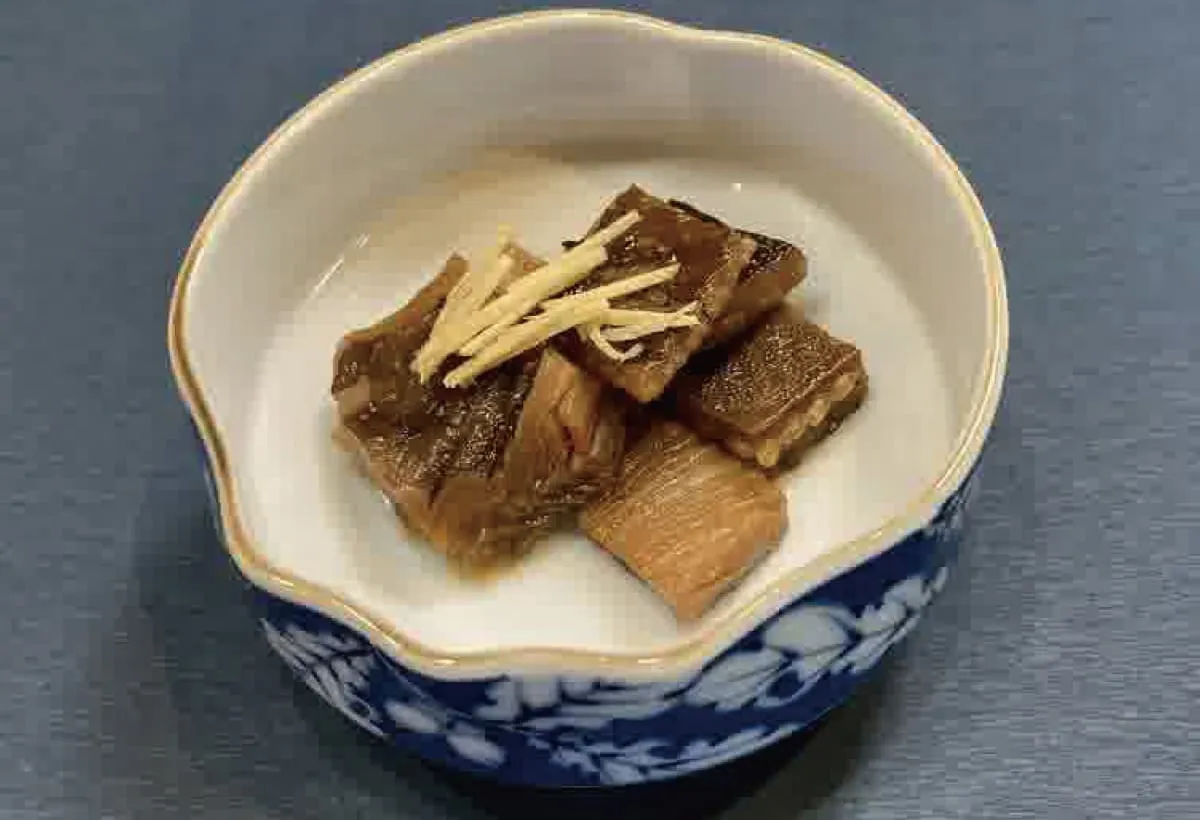
Kasube-ni (Simmered Skate Fish)
The appearance of kasube-ni (simmered skate) on menus and tables signals the approach of the Tsuchizaki Minato Hikiyama Matsuri Festival. Kasube-ni is prepared by rehydrating dried skate (a flat-bodied fish) in water before slowly simmering it in soy sauce, sugar, and mirin. The rehydrated fish has a distinct umami flavor that pairs well with local sake. The practice of drying and rehydrating originated from the need to preserve the fish for transport before modern refrigeration. Because it is time-consuming to prepare, kasube-ni is now primarily served in restaurants as a special dish during the Tsuchizaki Minato Hikiyama Matsuri Festival, although it was once an everyday household dish.
Fugu (Pufferfish)
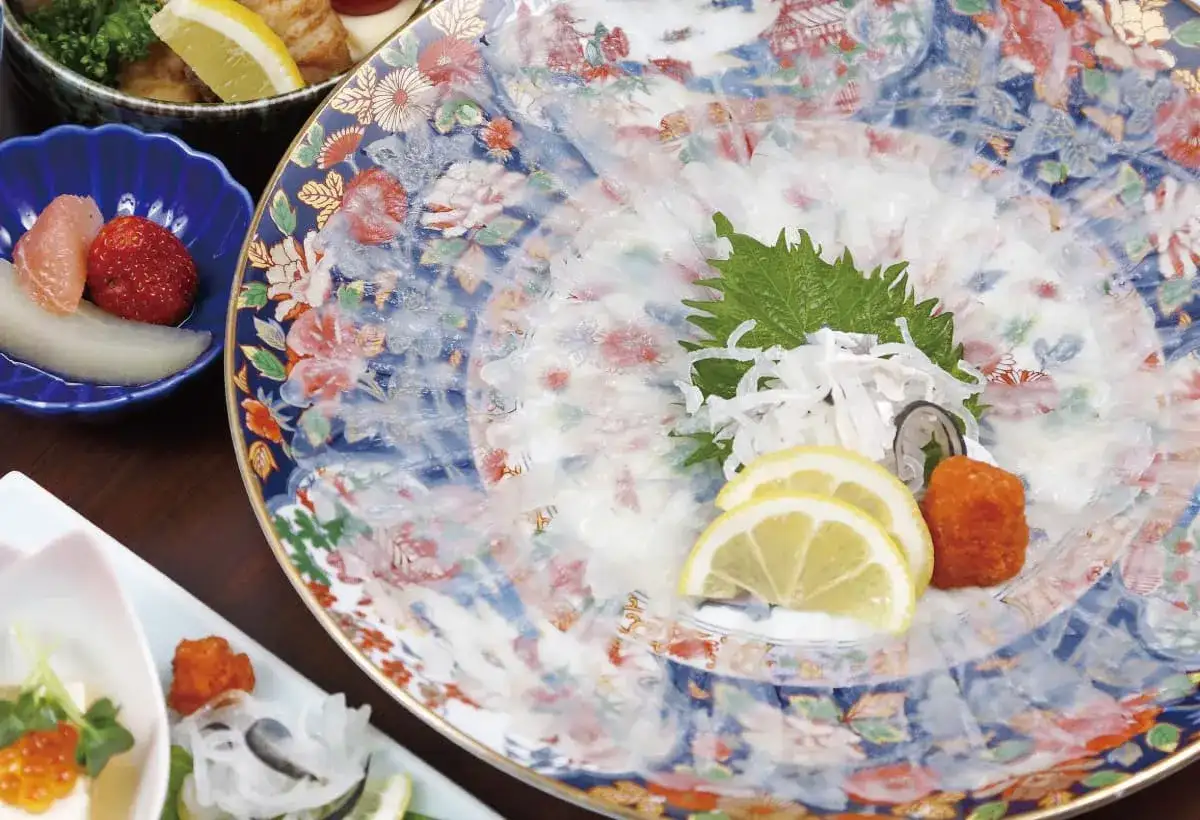
Fugu, or pufferfish, grow especially slowly in the cold waters off the coast of Akita Prefecture. This slow growth produces firmer meat with a chewy texture. Local fishermen began to catch more pufferfish around 1992 as part of a strategy to survive a ban on one of their most popular catches, hatahata (Japanese sandfish); the consumption of sandfish was banned for three years to help the population recover from overfishing. In response, local restaurants promoted the unique taste of Akita pufferfish and created a new local culinary specialty. Fugu is a delicacy that can only be prepared and served by licensed chefs, as some parts of the fish are extremely poisonous.